
.png)
Beyond the Stockyards: Fort Worth's Urban Renaissance Through Local Rentals
2026-01-27

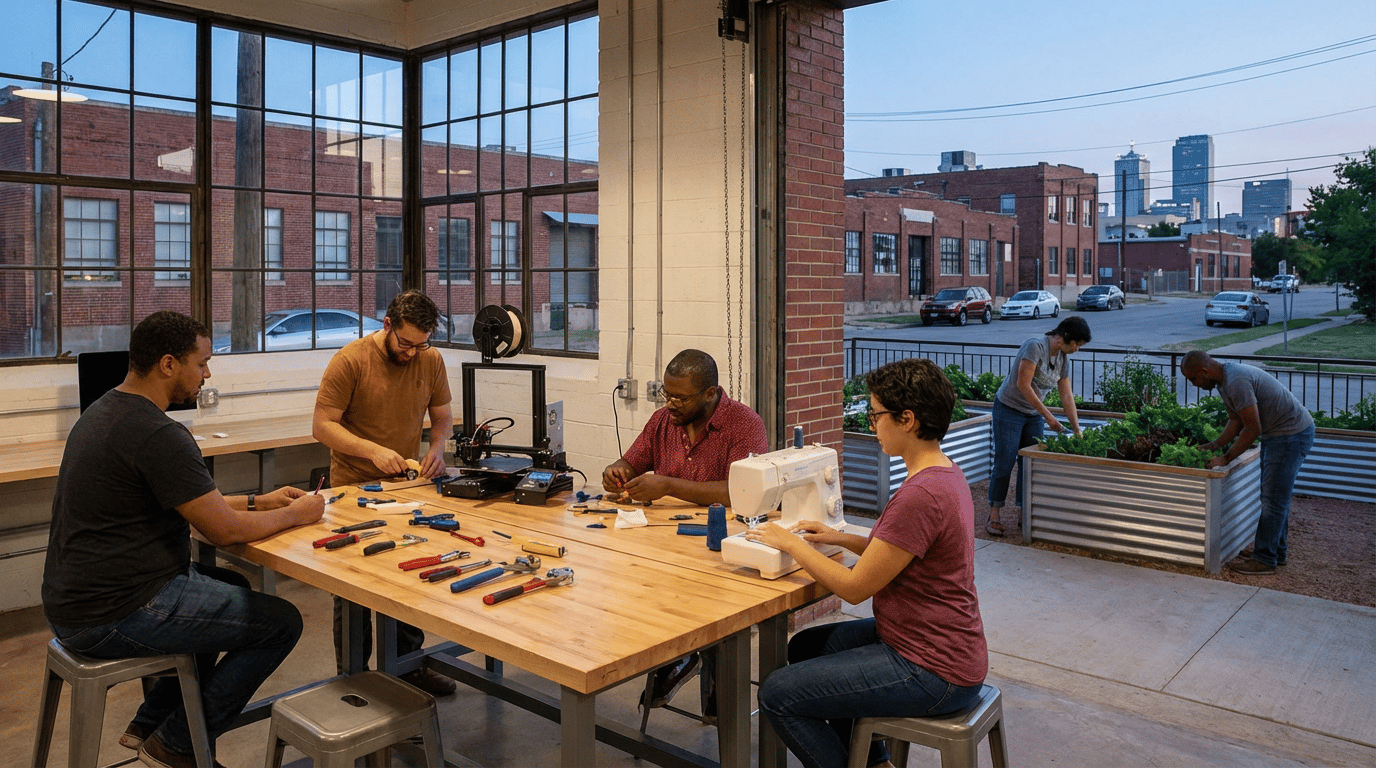
Fort Worth stands at a fascinating crossroads of identity. While proudly embracing its 'Where the West Begins' heritage, the city is simultaneously nurturing an urban renaissance that many visitors and even locals often overlook. Behind the well-worn cowboy boots and cattle drives lies a city reinventing itself through neighborhood revitalization, creative districts, and community-driven spaces. This transformation isn't happening through corporate development alone but through resourceful locals sharing tools, equipment, and expertise. As Fort Worth evolves beyond its western stereotype, the sharing economy has become instrumental in how residents are building, creating, and experiencing their city in new ways.
The Makers Reshaping [Near Southside](https://www.fortworth.com/explore-fort-worth/neighborhoods/near-southside/)
Fort Worth's [Near Southside district](https://nearsouthside.org/) has transformed from industrial obscurity into a creative hub where local artisans and entrepreneurs are redefining the city's cultural landscape. This neighborhood revitalization hasn't come from corporate investment alone but through grassroots collaboration among makers who share resources, tools, and knowledge. The district now houses collaborative workshops where woodworkers, metalworkers, and textile artists create everything from custom furniture to public art installations that reflect Fort Worth's evolving identity. These makers often rely on shared equipment rather than individual ownership, demonstrating how the sharing economy supports creative urban development. The district's monthly art walks showcase how these collaborative efforts are creating a distinct cultural identity that stands apart from both Dallas and Fort Worth's traditional western image.
Urban Agriculture Movements Taking Root
Beyond the cattle industry that shaped its history, Fort Worth is experiencing a quiet revolution in urban agriculture that's transforming neighborhoods and food systems. [Community gardens](https://fortworthgov.org/4380/Community-Gardens) have sprouted in unexpected places, from formerly vacant lots in Stop Six to educational spaces at [Texas Wesleyan University](https://www.txwes.edu/). These urban growing spaces aren't just about food production; they're becoming community anchors where knowledge and tools are freely exchanged. Residents are establishing seed libraries, tool-sharing programs, and educational workshops that make sustainable growing practices accessible regardless of income or property ownership. This movement reflects a distinctly Fort Worth approach to sustainability that honors the city's agricultural heritage while adapting it to urban realities and modern environmental challenges. The [Fairmount Community Garden](https://www.fortworthgov.org/4380/Community-Gardens) stands as a model for how shared resources can transform not just landscapes but social connections across diverse neighborhoods.
Trinity River's Transformation Through Community Stewardship
The [Trinity River](https://www.trinityriver.org/), once an afterthought in Fort Worth's urban development, has become central to the city's reimagined identity through grassroots environmental stewardship. Unlike the highly engineered river walks in other Texas cities, Fort Worth's approach has balanced ecological restoration with recreational access, largely through community-led initiatives. Volunteer groups regularly organize cleanup events, wildlife monitoring, and habitat restoration projects that have dramatically improved water quality and biodiversity. These efforts rely heavily on shared equipment, from water testing kits to kayaks used for trash collection. The [Trinity Trails system](https://www.fortworthgov.org/3247/Trinity-Trails), now spanning over 70 miles, has become a living laboratory where residents collaborate on environmental education and conservation, creating a uniquely Fort Worth model of urban river stewardship that contrasts with more commercialized waterfront developments elsewhere in Texas.
DIY Music Venues Redefining Cultural Spaces
While [Austin](https://www.austintexas.org/) claims the title of Texas music capital, Fort Worth has developed a distinctive DIY music scene that operates outside conventional venues and commercial structures. Repurposed warehouses in the [South Main district](https://southmaindfw.com/) and converted industrial spaces near the railyards host performances ranging from experimental noise to traditional Texas folk music. These venues function through informal resource-sharing networks where sound equipment, lighting rigs, and even performance spaces circulate among artists without commercial intermediaries. This approach has created performance opportunities for artists who might be excluded from more commercial venues, particularly those working in experimental genres or representing marginalized communities. The result is a music ecosystem that reflects Fort Worth's independent spirit while creating cultural spaces that resist both corporate homogenization and the commercialized western image often marketed to tourists.
Neighborhood Tool Libraries Building Community Resilience
In several Fort Worth neighborhoods, residents have established tool libraries that function as both practical resource centers and community building initiatives. These grassroots lending systems allow neighbors to borrow everything from power tools to canning equipment, reducing consumption while strengthening community bonds. The [Polytechnic Heights Tool Share](https://www.fortworthgov.org/4380/Community-Gardens), operated entirely by volunteers from a converted garage, has become particularly vital in this historically underserved neighborhood, providing residents with resources for home repairs and improvement projects that would otherwise be financially out of reach. Beyond the practical benefits, these tool libraries have become knowledge-sharing hubs where skills are exchanged through informal mentorship and scheduled workshops. This model of resource sharing represents a distinctly Fort Worth approach to community resilience that combines practical self-reliance with collaborative support systems.
Adaptive Reuse Projects Preserving Industrial Heritage
Fort Worth's industrial past is finding new life through community-driven adaptive reuse projects that honor manufacturing heritage while creating spaces for contemporary needs. Unlike developer-led gentrification that often erases historical context, these grassroots efforts preserve industrial character while making spaces accessible for new uses. In the [South Main district](https://southmaindfw.com/), former manufacturing facilities now house maker spaces, art studios, and small-batch production facilities where equipment and expertise are commonly shared. The Near Southside's transformation of former auto repair shops into community gathering spaces exemplifies this approach. These projects often rely on shared construction equipment, salvaged materials exchanges, and collective labor that make preservation economically viable while maintaining authentic industrial character. This community-centered approach to adaptive reuse has created a distinctly Fort Worth model of urban revitalization that contrasts with more commercially driven development in neighboring cities.
As Fort Worth continues to evolve beyond its western stereotype, the sharing economy has become essential to how residents are reshaping their city's identity. From maker spaces to urban agriculture, community-led initiatives are creating a more collaborative, sustainable urban environment that honors the city's heritage while embracing innovation. This grassroots approach to urban development reflects Fort Worth's independent spirit and practical resourcefulness, qualities that have defined the city since its frontier days but now find expression in contemporary forms of community building. By sharing resources rather than duplicating them, Fort Worth residents are creating a more accessible, connected city that offers authentic experiences beyond the tourist-oriented western imagery. The result is a Fort Worth that remains proudly Texan while defining that identity on its own terms, one shared tool, space, and skill at a time.
.png)