
.png)
Exploring Boston's Hidden Waterways: Kayaking Adventures Beyond the Charles River (Summer 2025)
2026-02-13

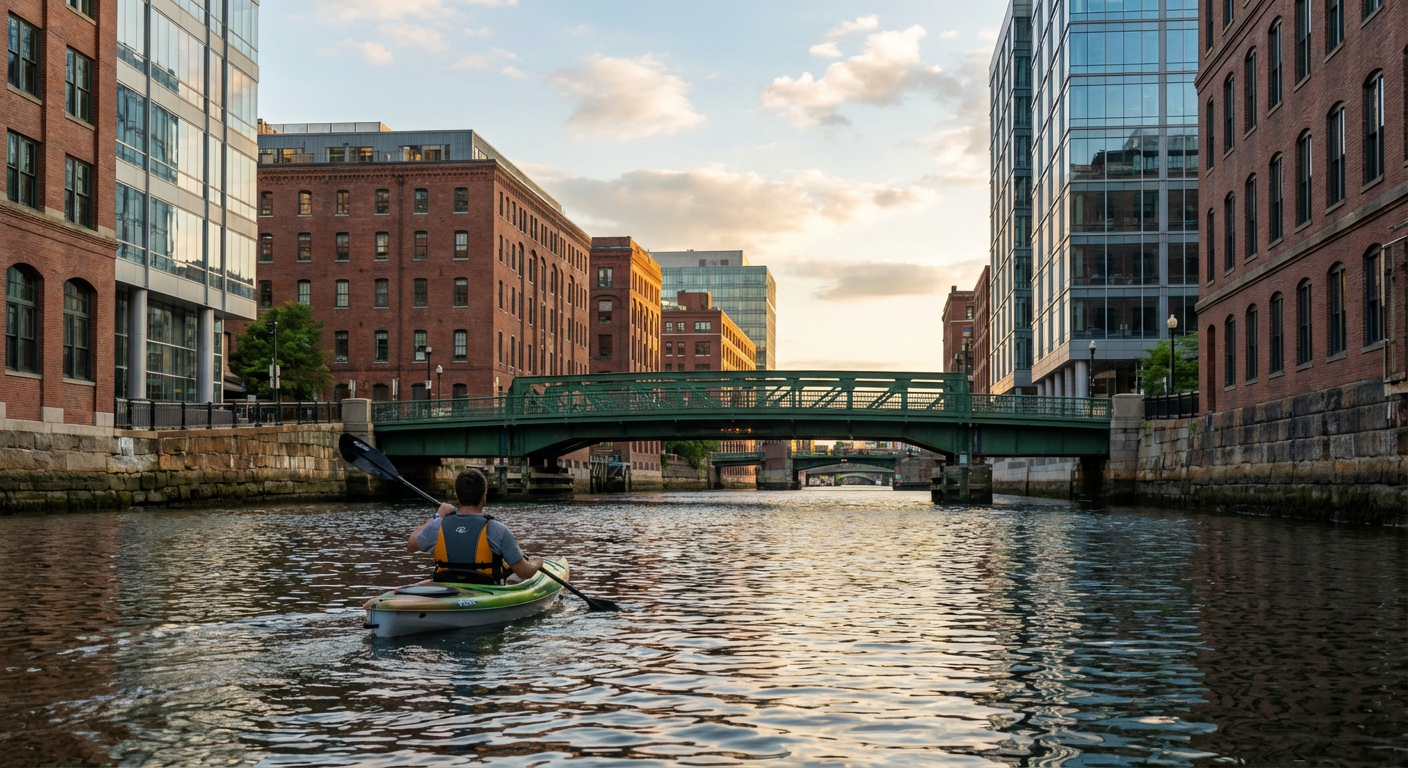
Boston's relationship with water runs deeper than most visitors realize. While the [Charles River](https://www.mass.gov/locations/charles-river-reservation) gets all the attention, a network of lesser-known urban waterways offers paddlers a fresh perspective on the city. This summer, as temperatures rise and Bostonians seek relief from the heat, these hidden paddling routes provide the perfect escape without leaving city limits. Whether you're a local looking for a new weekend adventure or a visitor wanting to experience Boston from a different angle, renting a kayak offers an affordable way to discover the city's aquatic secrets. With storage space at a premium in Boston's compact neighborhoods, renting makes even more sense than owning bulky watercraft that you'll only use seasonally.
Boston's Overlooked Paddling Destinations
The [Neponset River Estuary](https://www.neponset.org/), flowing along Boston's southern border with Quincy and Milton, offers a peaceful paddling experience with surprising wildlife encounters. Unlike the busier Charles, the Neponset provides glimpses of herons, egrets, and even harbor seals against a backdrop of urban wilderness. The [Mystic River watershed](https://www.mysticriver.org/) to the north presents another option, with its network of interconnected waterways stretching from Medford to Chelsea. For those seeking urban exploration, [Fort Point Channel](https://www.bostonplans.org/planning/planning-initiatives/fort-point-channel) cuts through Boston's Innovation District, allowing paddlers to glide beneath historic bridges while surrounded by contemporary architecture. According to the [Neponset River Watershed Association](https://www.neponset.org/), summer water quality in these areas typically reaches its peak in July and August, making it the ideal time for water activities. Each of these waterways offers a distinct perspective on Boston's relationship with its harbor, without the crowds that flock to the Charles River Esplanade.
Essential Gear for Urban Paddling
Urban kayaking requires specific equipment that differs from lake or ocean paddling. A stable recreational kayak with adequate storage is ideal for navigating Boston's waterways. Look for kayaks with sealed compartments to keep your belongings dry, especially important when paddling through areas with limited landing spots. A properly fitted personal flotation device (PFD) is non-negotiable - the [Massachusetts Environmental Police](https://www.mass.gov/environmental-police) require one for each person on board. Waterproof bags for phones and cameras will protect your electronics while allowing you to capture Boston's skyline from unique vantage points. Rather than investing in equipment you'll only use during Boston's brief summer season, consider renting. [Yoodlize](https://www.yoodlize.com) offers peer-to-peer kayak rentals at a fraction of retail prices, with options ranging from recreational sit-on-tops to more specialized touring models. Many local owners include paddles, PFDs, and dry bags with their rentals, making it a convenient one-stop solution.
Neponset River Estuary: Boston's Southern Secret
The Neponset River Estuary offers 8 miles of navigable water, with several public launch points making it accessible for paddlers of all levels. [Pope John Paul II Park](https://www.mass.gov/locations/pope-john-paul-ii-park) in Dorchester provides an excellent starting point with its dedicated kayak launch and ample parking. From there, paddlers can explore upstream toward Lower Mills or downstream toward the harbor, with multiple exit points along the way. The [Massachusetts Department of Conservation and Recreation](https://www.mass.gov/orgs/department-of-conservation-recreation) maintains several access points, including launches at Neponset Park and the Martini Shell. Summer brings ideal conditions, with water temperatures averaging 70°F in July and August according to the [Neponset River Watershed Association's](https://www.neponset.org/) monitoring program. The river's tidal nature means timing your paddle with the incoming tide makes for an easier return journey. Look for great blue herons fishing in the salt marshes and red-tailed hawks soaring overhead. The river's relatively protected waters make it suitable for beginners, though wind conditions can change quickly near the harbor.
Mystic River: North Boston's Paddling Network
The Mystic River watershed encompasses 76 square miles north of Boston, offering diverse paddling experiences from urban corridors to more natural settings. The [Blessing of the Bay Boathouse](https://www.somervillema.gov/departments/blessing-bay-boathouse) in Somerville provides an excellent launch point with seasonal kayak rentals, though bringing your own equipment gives you more flexibility to explore. Paddlers can navigate from the Mystic Lakes through Arlington, Medford, and Somerville before reaching Boston Harbor at Charlestown. The [Mystic River Watershed Association](https://www.mysticriver.org/) hosts regular cleanup paddling events throughout summer, combining recreation with environmental stewardship. Water quality has improved dramatically in recent years, though the Mystic River Watershed Association recommends checking their [weekly water quality reports](https://www.mysticriver.org/water-quality) before heading out. The river passes through several historic industrial areas, offering a fascinating glimpse into Boston's manufacturing past. Urban wildlife includes osprey, cormorants, and the occasional bald eagle, particularly near the Mystic Lakes. For those seeking a longer adventure, the Malden River tributary offers additional exploration opportunities through revitalized urban landscapes.
Fort Point Channel: Paddling Through Boston's Innovation District
Fort Point Channel cuts through Boston's Innovation District, offering a uniquely urban paddling experience surrounded by historic warehouses and modern glass towers. The channel's protected waters make it ideal for beginners, with minimal boat traffic during weekends. Launch from the public dock at [Atlantic Wharf](https://www.atlanticwharf.com/) or coordinate with [Fort Point Channel Operations](https://www.bostonplans.org/planning/planning-initiatives/fort-point-channel) for access to their kayak launch. Paddling here provides close-up views of Boston's architectural evolution, from 19th-century industrial buildings to contemporary sustainable designs. The [Fort Point Channel Watershed Association](https://www.bostonplans.org/planning/planning-initiatives/fort-point-channel) offers guided historical paddles during summer months, providing context for the area's transformation. Water quality in the channel has improved significantly with [Boston Harbor cleanup efforts](https://www.mass.gov/service-details/boston-harbor-cleanup), though it's still advisable to minimize water contact. The channel's bridges showcase different engineering eras, from the massive Northern Avenue Bridge to the elegant Congress Street Bridge. For a unique experience, time your paddle with one of the Fort Point Channel's summer floating art installations, which typically appear between June and September.
Planning Your Boston Paddling Adventure
Boston's waterways are busiest on weekend mornings, so consider a weekday or late afternoon paddle for a more peaceful experience. Always check tide charts when planning harbor-adjacent routes, as currents can be surprisingly strong during tide changes. The [Boston Harbor Association](https://www.bostonharbor.org/) publishes real-time water quality data that's essential for making informed decisions about when and where to paddle. Most urban routes offer limited landing spots, so plan accordingly with adequate water and snacks. Summer thunderstorms can develop quickly, so check hourly forecasts from the [National Weather Service](https://www.weather.gov/box/) before launching. For those new to kayaking, consider joining one of the many guided tours offered by local outfitters, which provide equipment and safety instruction. The Massachusetts Department of Conservation and Recreation requires all kayakers to have a whistle or other sound-producing device on board. If paddling after sunset, which offers spectacular views of Boston's illuminated skyline, [Coast Guard regulations](https://www.uscgboating.org/) require a white light visible from 360 degrees.
Boston's hidden waterways offer a refreshing alternative to traditional sightseeing, allowing you to experience the city from a unique perspective while escaping the summer crowds. Whether you're exploring the wildlife-rich Neponset Estuary, navigating the historic Mystic River, or paddling through the urban canyons of Fort Point Channel, these water routes reveal aspects of Boston that remain invisible to land-bound visitors. Rather than investing in kayaking equipment that will gather dust for most of the year, take advantage of [Yoodlize's](https://www.yoodlize.com) peer-to-peer rental marketplace to find affordable, high-quality gear from local owners. Not only does renting save you money and storage space, but it also connects you with knowledgeable locals who can share insider tips about the best paddling routes. This summer, discover why Boston's relationship with water extends far beyond the famous Charles River, and create memories that few tourists – or even locals – ever experience.
.png)