
.png)
Buy or Rent a Paddleboard in Austin? We Ran the Numbers (2026)
2026-07-09

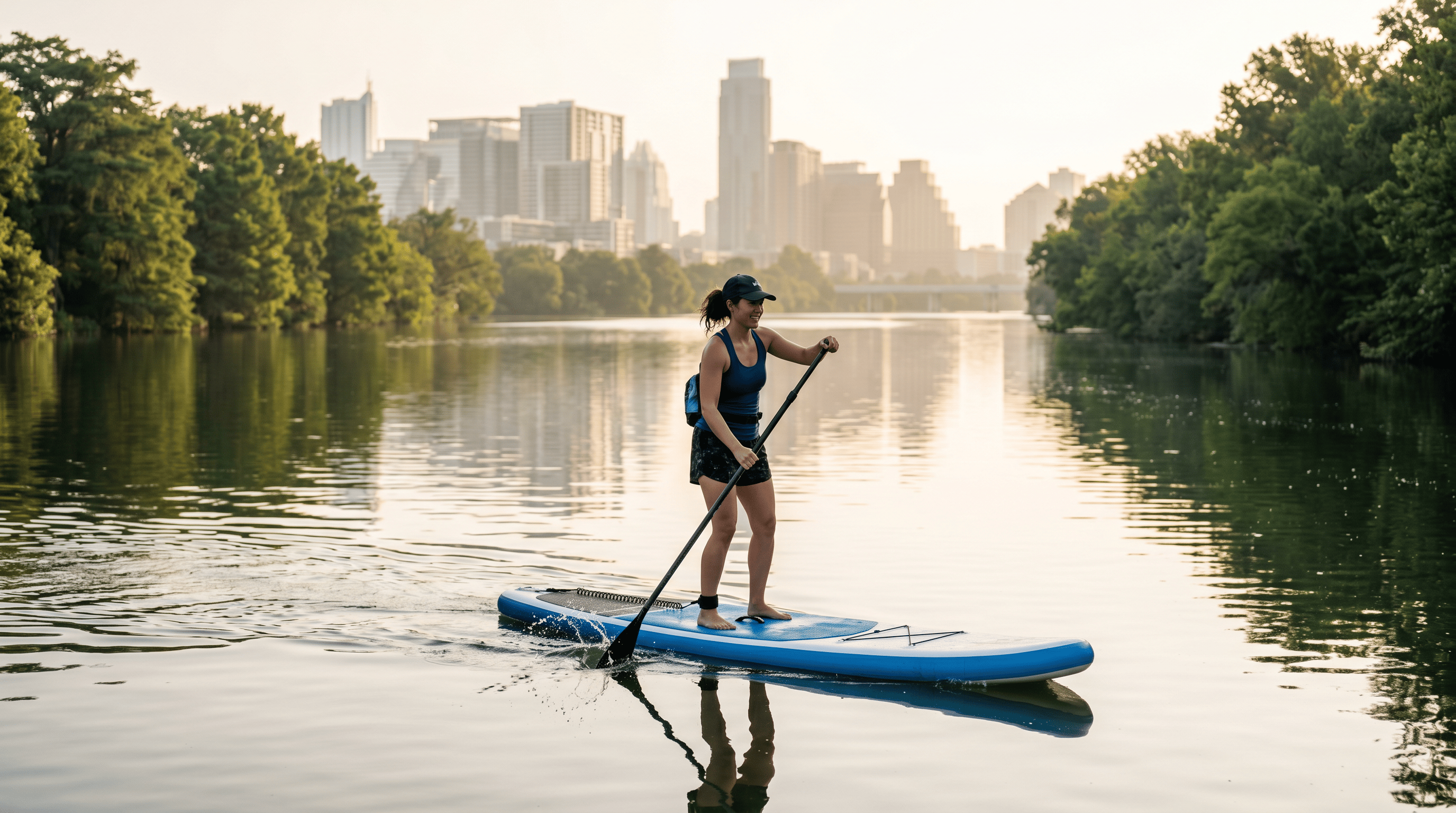
Spend any time near Lady Bird Lake or the Colorado River this summer and you'll notice the water is packed with paddleboards. Search interest for paddleboarding in Austin has climbed steadily through June and July 2026, and it's easy to see why — flat water, warm temperatures, and accessible launch points make stand-up paddleboarding one of the city's fastest-growing outdoor activities. But before you drop $800 to $1,400 on a board, it's worth asking a simple question: does buying actually make sense for how often you'll use it? This post breaks down real purchase costs, local rental rates, and the honest break-even math — so you can make the call that fits your lifestyle and your budget.
What a Paddleboard Actually Costs in Austin
Entry-level hard paddleboards at Austin retailers like REI run $600 to $900. Mid-range inflatable SUPs — popular for obvious storage reasons in Austin apartments and condos — typically land between $500 and $800. Premium boards from brands like Red Paddle Co or Starboard push $1,200 to $1,800. On the rental side, commercial outfitters near Lady Bird Lake charge roughly $20 to $30 per hour or $60 to $90 for a full day. Peer-to-peer rentals through platforms like Yoodlize tend to come in lower — typically $40 to $70 per day depending on board type and included accessories — making them one of the most cost-effective ways to get on the water without a long-term commitment.
The Break-Even Math: When Does Buying a Paddleboard Pay Off?
Let's keep this simple. Assume you buy a solid mid-range inflatable SUP for $700 and the going peer-to-peer rental rate is $55 per day. Occasional paddler (3–4 times per year): You'd spend $165 to $220 annually renting. Breaking even on a $700 board takes roughly 13 rental days — about 3 to 4 years of occasional use. Renting wins. Seasonal paddler (10–15 times per year): At $55 per day, that's $550 to $825 in annual rentals. You'd break even on your board in under 13 uses — potentially within a single Austin summer. Buying starts to make sense. Regular paddler (20+ times per year): You're spending over $1,100 annually on rentals. A $700 board pays for itself in less than one full season. Buy the board. Austin's paddleboard season runs roughly April through October — seven solid months. If you're getting on the water more than once a month during that window, ownership math tips in your favor. If you're a twice-a-summer paddler, renting is almost certainly the smarter financial call.
5 Reasons to Rent a Paddleboard in Austin Instead of Buying
- Storage is a real constraint: Austin's density means closet space is precious. Even a rolled-up inflatable SUP needs dedicated storage, plus a pump, leash, and fin set. Renting eliminates all of that overhead.
- You're new to SUP: Austin's rental scene near Lady Bird Lake is beginner-friendly. Renting lets you try different board shapes and sizes — hard, inflatable, yoga SUP — before committing to a purchase.
- You're hosting guests: Renting an extra board for a weekend with out-of-town friends is far more practical than owning multiple boards. Peer-to-peer rentals through Yoodlize make it easy to grab what you need for a day without dealing with a commercial outfitter.
- You want access to premium gear: A $55 rental might get you a $1,400 carbon-fiber board you'd never buy outright. Renting gives you access to better equipment on demand.
- You paddle in multiple locations: If you're mixing Lady Bird Lake sessions with trips to Lake Travis or the Guadalupe River, renting locally at each spot can beat hauling your own board across town on a roof rack.
What to Check Before You Rent a Paddleboard
Whether you're renting from a local outfitter or a neighbor on Yoodlize, run through this quick checklist before you hit the water:
- Board type and volume: Confirm whether it's a hard epoxy or inflatable SUP, and check the volume rating — heavier paddlers need higher volume for proper flotation.
- Fin and deck pad condition: Look for missing fins, peeling traction pads, or bubbling foam. These affect tracking, stability, and grip more than most beginners expect.
- Leash included: A coiled ankle leash should always be part of the rental. Check that the velcro attachment is secure before you launch.
- Paddle fit: The paddle should be adjustable and set roughly 6 to 10 inches above your head height. Confirm the clamp locks firmly.
- Inflation level (inflatables only): Inflatable SUPs should be inflated to 12 to 15 PSI. Ask the owner to confirm or bring a pressure gauge.
- Damage terms: Clarify what counts as normal wear versus damage before pickup. Yoodlize handles this through the listing agreement, so review it before you confirm the booking.
Paddleboard Rentals Available in Austin on Yoodlize
Peer-to-peer paddleboard supply on Yoodlize in Austin hasn't yet caught up with the city's demand — and that's actually worth noting for two reasons. First, if you're looking to rent, it's worth checking the Austin listings page on Yoodlize regularly, as new gear gets added frequently across all outdoor categories. Second, if you own a paddleboard sitting in your garage between sessions, this is a genuine gap in the Austin market you could fill. Listing on Yoodlize is free, and with peer-to-peer daily rates running $40 to $70, a board that gets rented just 10 days per season could generate $400 to $700 in passive income — potentially covering the cost of the board within a season or two. Austin's paddleboard demand is clearly there. The peer-to-peer supply just hasn't caught up yet.
For most Austin paddlers — especially those who get on the water five or fewer times per season — renting a paddleboard is the smarter financial move. The break-even point on a $700 board sits around 13 rental days, which takes the average occasional paddler three to four years to reach. Paddle consistently through Austin's long warm season and ownership makes sense after year one. Either way, Yoodlize is the best place to start — browse what neighbors have available to rent, or list your own gear and earn from the days it would otherwise sit unused. Austin's outdoor community is active, and the peer-to-peer rental market is just getting started.
.png)