
.png)
Creative Maker Spaces in Albany: Renting Tools for DIY Projects and Community Innovation
2026-02-12

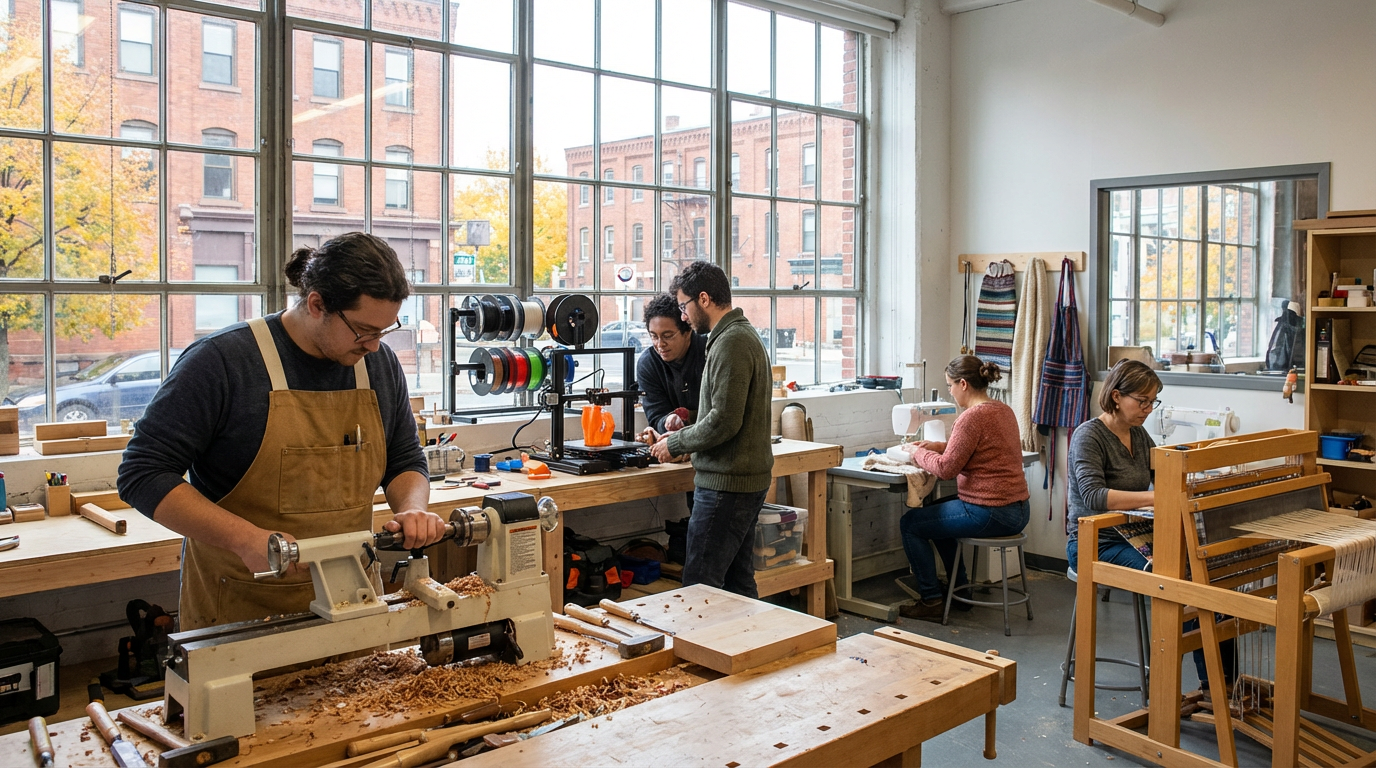
Albany is experiencing a renaissance in hands-on creativity, with maker spaces, community workshops, and DIY enthusiasts transforming the capital city into a hub for innovation. Whether you're a weekend woodworker, an aspiring artist, or simply someone who enjoys the satisfaction of creating something with your own hands, Albany offers numerous opportunities to explore your creative side. But the barrier to entry for many maker projects is often the specialized tools and equipment required. That's where the sharing economy comes in—renting tools and equipment when you need them not only makes financial sense but also promotes sustainability and community connection.
Albany's Emerging Maker Culture
The maker movement in Albany has been gaining momentum, with community workshops, collaborative spaces, and skill-sharing events popping up throughout the city. This grassroots approach to creativity emphasizes learning by doing, cross-disciplinary collaboration, and sustainable practices. Unlike traditional crafting or DIY, the maker culture embraces technology alongside traditional tools, creating a unique blend of old and new techniques. Local initiatives like the https://www.tvcog.net/' target'blank'>Tech Valley Center of Gravity in nearby Troy and various workshops at the https://www.albanypubliclibrary.org/' target'blank'>Albany Public Library have created accessible entry points for curious minds. What makes Albany's maker scene particularly special is its connection to the city's industrial heritage and academic institutions, creating a rich environment for innovation that draws from both historical knowledge and cutting-edge research.
Tool Libraries and Resource Sharing
While many cities have established tool libraries, Albany's approach to resource sharing has evolved in a more decentralized way. Rather than a single centralized tool library, Albany residents have embraced peer-to-peer lending platforms like https://www.yoodlize.com/' target'blank'>Yoodlize that connect tool owners with those who need temporary access. This model offers several advantages: a wider variety of available tools, more flexible pickup locations throughout the city, and the opportunity to learn directly from the tool owner about proper usage. For specialized projects, this can be invaluable—imagine borrowing a laser cutter from someone who can give you tips on material selection, or renting a professional-grade table saw from a woodworker who can share techniques. This knowledge exchange creates a richer experience than simply checking out a tool from a library, and helps build community connections around shared interests.
Woodworking and Furniture Restoration
Albany's historic architecture has inspired a renewed interest in woodworking and furniture restoration. Many residents are discovering the satisfaction of creating or restoring wooden pieces that complement their homes' character. For beginners, simple projects like building a bookshelf or restoring an antique side table provide an accessible entry point. More advanced woodworkers might tackle custom cabinetry or reproduction of historic architectural elements. The challenge for many enthusiasts is workspace and tools—specialized woodworking equipment is expensive and requires dedicated storage space. Renting tools like orbital sanders, router tables, or specialized clamps makes these projects feasible without a significant investment. Local woodworking enthusiasts have also organized informal skill-sharing sessions where beginners can learn techniques like dovetail joints or proper finishing methods, creating a supportive community for those interested in preserving Albany's wooden heritage through their own projects.
Digital Fabrication and 3D Printing
The intersection of technology and physical creation has found a home in Albany, particularly around the https://www.albany.edu/' target'blank'>University at Albany and local tech startups. Digital fabrication—using computer-controlled tools to create physical objects—has become increasingly accessible to hobbyists and entrepreneurs alike. 3D printing, laser cutting, and CNC machining allow creators to produce precise, customized items ranging from replacement parts to artistic sculptures. While the equipment for digital fabrication can be prohibitively expensive for individuals, the rental market has responded with options for short-term access. This democratization of technology has enabled small business owners to prototype products, artists to explore new mediums, and inventors to test concepts without massive capital investment. Community workshops focusing on digital fabrication have also emerged as spaces where knowledge is freely shared, creating an ecosystem that supports innovation at all levels.
Urban Gardening and Sustainable Living Projects
Albany's commitment to sustainability has sparked interest in urban gardening, composting, and eco-friendly home improvements. Community gardens have transformed vacant lots into productive green spaces, while individual residents are creating backyard oases and even indoor growing systems. These projects often require specialized tools—from tillers and aerators for soil preparation to grow lights and hydroponics equipment for indoor gardening. The seasonal nature of gardening makes renting particularly sensible; tools needed for spring preparation may sit unused for the remainder of the year. Beyond gardening, sustainability-minded residents are tackling home improvement projects like installing rainwater collection systems, building compost bins, or creating solar dehydrators. These projects align with Albany's climate goals while allowing residents to develop practical skills. Workshops on seed starting, composting, and season extension techniques have become popular community events, especially as interest in food security and local production has increased.
Textile Arts and Fiber Crafts
Textile arts have experienced a revival in Albany, with knitting circles, sewing classes, and fiber arts collectives creating vibrant communities around these traditional crafts. The appeal spans generations, with younger participants drawn to the sustainability aspects of creating and mending their own clothing, while older practitioners often bring valuable traditional knowledge. Equipment for textile arts—from sewing machines and sergers to looms and spinning wheels—can be both expensive and space-consuming, making rental an attractive option for those exploring these crafts or working on occasional projects. Local fiber enthusiasts have organized skill exchanges where techniques like natural dyeing (using plants found in Albany's parks), pattern drafting, and traditional weaving are shared. These gatherings often take place in community spaces or local cafes, creating informal maker spaces that welcome newcomers while honoring traditional knowledge. The textile community has also connected with local farms that produce wool and other fibers, creating a regional supply chain that supports both agriculture and crafting.
Albany's maker culture continues to evolve, creating opportunities for residents to learn new skills, connect with like-minded creators, and bring their ideas to life. By embracing tool sharing and rental options, more people can participate in this creative ecosystem without the barriers of cost and storage. Whether you're interested in traditional crafts, cutting-edge technology, or sustainable living projects, the resources available through community spaces and peer-to-peer platforms like https://www.yoodlize.com/' target'blank'>Yoodlize make it possible to turn inspiration into reality. As you explore your own creative interests, consider how renting tools and equipment can expand your possibilities while connecting you to Albany's innovative maker community.
.png)