
.png)
Why Flagstaff's Altitude Makes Renting Gear Smarter Than Owning It
2025-12-10

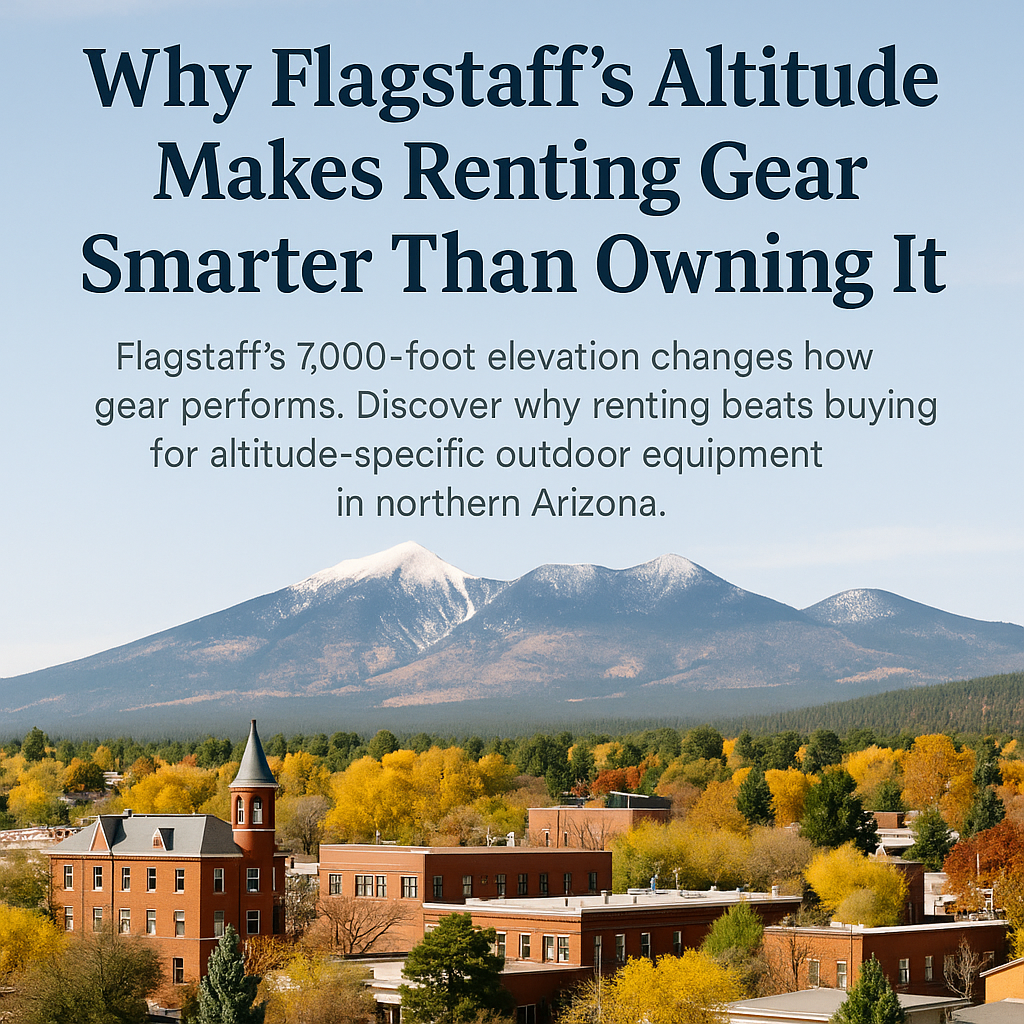
At 7,000 feet above sea level, Flagstaff operates under different rules than most Arizona cities. The thin air changes everything from how your body responds to exertion to how equipment performs under stress. While Phoenix residents might own a single set of recreational gear year-round, Flagstaff's dramatic seasonal swings and altitude-specific demands create a different reality. The same elevation that draws adventurers to the Coconino National Forest also means that gear optimized for sea level often underperforms here. This elevation factor, combined with Flagstaff's position as a four-season outdoor hub, makes equipment rental not just convenient but economically rational.
The Elevation Equipment Problem Nobody Talks About
Most outdoor gear gets designed and tested at lower elevations where oxygen is abundant and temperature swings are moderate. Flagstaff's 7,000-foot baseline altitude means your lungs work 25% harder during physical activity, but it also means your equipment faces challenges manufacturers rarely advertise. Inflatable kayaks and paddleboards lose pressure faster in thin air. Propane stoves burn less efficiently, requiring different fuel calculations. Even bicycle tires need different pressure adjustments than sea-level recommendations suggest. The National Weather Service in Flagstaff reports temperature variations of 40 degrees between day and night during shoulder seasons, which means gear that works perfectly at 2pm might fail by 8pm. Owning equipment for these conditions means either buying specialized high-altitude versions or accepting suboptimal performance. Renting solves this by giving you access to gear that locals have already tested and adjusted for Flagstaff's specific atmospheric conditions. When you rent a camping stove on Yoodlize from a Flagstaff resident, you're getting equipment that someone has already calibrated for 7,000 feet, not a factory setting designed for Denver or San Diego.
Four Seasons Means Four Different Equipment Sets
Flagstaff's position beneath the San Francisco Peaks creates genuine four-season conditions that demand completely different gear arsenals. Winter brings an average of 100 inches of snow to the Arizona Snowbowl, requiring skis, snowshoes, and cold-weather camping equipment. Spring melt transforms the landscape into mountain biking terrain as trails dry out across Buffalo Park and the Schultz Creek system. Summer monsoons arrive in July, making waterproof gear essential for afternoon thunderstorms that the National Weather Service tracks closely. Fall brings elk hunting season and leaf-peeping expeditions to the aspen groves on the Inner Basin Trail. Owning appropriate gear for all four seasons means maintaining skis you'll use three months per year, mountain bikes that sit unused during snow season, and camping equipment that requires different specifications depending on whether you're facing August heat or October frost. The storage alone becomes a second rent payment. Renting through Yoodlize means you can access a professional-grade mountain bike in May, trade it for camping gear in July, and switch to cross-country skis in December without the maintenance burden, storage headaches, or capital outlay of ownership.
The Adventure Course Economy and Specialized Equipment
Flagstaff's outdoor recreation economy has evolved beyond simple hiking and camping. Flagstaff Extreme Adventure Course represents a new category of tree-based obstacle courses that require specialized safety equipment most people will never use again after a single visit. The facility's 80+ obstacles suspended 15 to 60 feet in ponderosa pines attract families who need gear for one afternoon, not ongoing ownership. Similarly, the explosion of e-bike exploration around town has created demand for electric bicycles that cost thousands to purchase but make sense for weekend visitors exploring Historic Route 66 or the Urban Trail System. Rock climbing at the volcanic crags near Sunset Crater requires harnesses, shoes, and protection gear that beginners shouldn't buy until they know whether the sport suits them. The Flagstaff Convention and Visitors Bureau promotes these specialized activities to tourists, but the equipment barrier prevents many from participating. Rental platforms bridge this gap by making specialized gear accessible for single-use adventures. When you can rent climbing equipment for a day at the price of a restaurant meal, you remove the financial barrier that keeps people from trying new activities.
Altitude Adjustment Period and Short-Term Gear Needs
Visitors arriving in Flagstaff from lower elevations face a physiological challenge that changes their equipment needs. The first 48-72 hours at altitude reduce physical capacity by 20-30% as bodies adjust to reduced oxygen availability. This adjustment period means that tourists often overestimate their ability to handle challenging trails or extended outdoor activities. Someone who regularly bikes 30 miles at sea level might struggle with 15 miles on the Schultz Creek Trail system during their first days in Flagstaff. This creates a paradox where visitors need easier, more forgiving equipment during their adjustment period, then can handle more advanced gear once acclimated. Buying equipment for a week-long visit makes no sense when your capabilities will change mid-trip. Renting allows you to start with a comfort-oriented mountain bike for day one, then upgrade to a performance model once your body adapts. The same logic applies to camping gear, where altitude-related sleep disruption during the first night might make you wish you'd rented a more comfortable sleeping pad than the ultralight version you own. Yoodlize's local rental network means you can adjust your gear selection based on how your body actually responds to Flagstaff's elevation, rather than guessing before you arrive.
The Maintenance Reality of High-Altitude Gear
Equipment maintenance at 7,000 feet follows different rules than lower elevations. UV radiation increases approximately 10% for every 3,000 feet of elevation gain, which means Flagstaff's sun degrades plastics, fabrics, and rubber compounds faster than the same products experience in Phoenix. The intense UV exposure that makes Lowell Observatory perfect for stargazing also destroys outdoor gear at accelerated rates. Kayaks develop stress cracks sooner. Tent fabrics lose water resistance faster. Bicycle components wear differently under the combination of altitude, UV exposure, and dramatic temperature swings between the 20-degree winter nights and 80-degree summer afternoons. Professional outdoor equipment maintenance in Flagstaff costs more than in other markets because technicians must account for these altitude-specific wear patterns. Ski tune-ups at Peace Outfitters include adjustments that sea-level shops never consider. When you rent gear on Yoodlize, the owner absorbs these maintenance costs and altitude-related depreciation. You get equipment that's been properly maintained for Flagstaff conditions without paying for specialized service knowledge or dealing with the accelerated aging that high-altitude storage creates.
Seasonal Storage in a College Town
Flagstaff's identity as home to Northern Arizona University creates a transient population that makes long-term gear ownership particularly impractical. Students and seasonal workers who live here for academic years or summer tourism seasons face the storage problem that ownership creates. A student renting an apartment near campus doesn't have space for skis, mountain bikes, camping equipment, and climbing gear. Seasonal tourism workers in their twenties prioritize mobility over possessions, knowing they might move to another mountain town when Flagstaff's season ends. Even permanent residents face storage challenges in a town where housing costs have risen faster than income, making every square foot of living space precious. The average Flagstaff apartment doesn't include a garage or storage unit, which means outdoor gear either clutters living areas or requires paying for external storage that can cost $100+ monthly. Renting eliminates this spatial economics problem entirely. When you need gear for a weekend at Walnut Canyon National Monument, you rent it Friday and return it Sunday. No storage fees, no apartment clutter, no moving costs when your lease ends. For Flagstaff's mobile population, this model aligns perfectly with lifestyle realities that traditional ownership ignores.
Flagstaff's 7,000-foot elevation creates equipment demands that make ownership increasingly impractical for both residents and visitors. The combination of altitude-specific performance requirements, genuine four-season conditions, accelerated UV degradation, and storage challenges in a college town all point toward rental solutions as the rational choice. Whether you're a student avoiding storage fees, a visitor adjusting to thin air, or a local who wants access to specialized gear without maintenance burdens, Yoodlize's rental marketplace offers altitude-tested equipment from people who understand how gear performs in northern Arizona's unique conditions. Browse available rentals in Flagstaff and discover why the smartest adventurers are choosing access over ownership at 7,000 feet.
.png)