
.png)
Rent or Buy a Generator in Dayton, OH? Here's the Real Math
2026-07-10

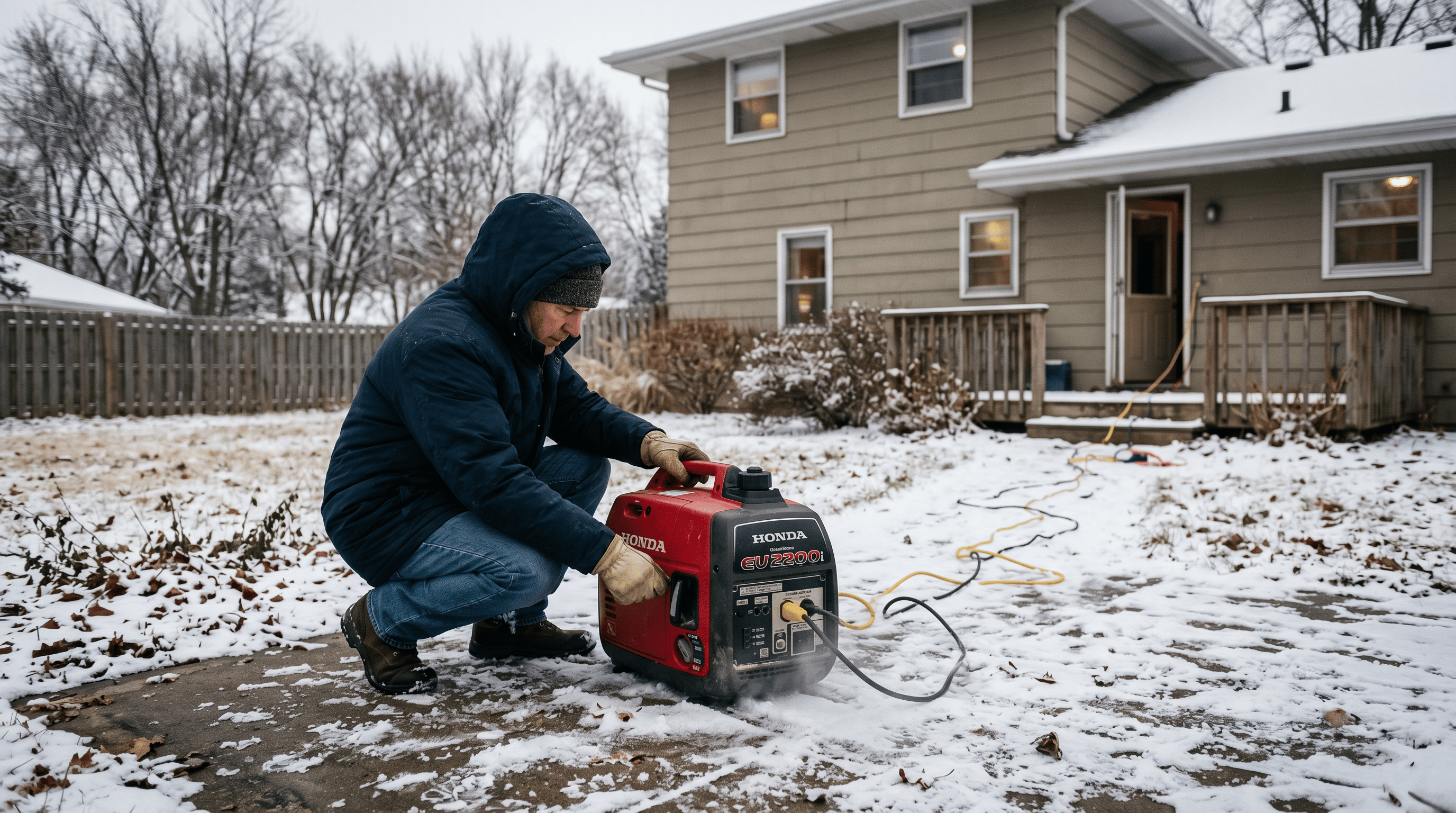
If you've been weighing whether to rent or buy a generator in Dayton, Ohio, you're asking exactly the right question — and you're not alone. Google Trends data shows generator searches in the Dayton region consistently score between 80 and 100 out of 100, spiking hardest during late summer storm season and winter ice events. Whether you're prepping for a power outage, powering a vendor booth at a summer festival, or keeping tools running on a jobsite, the right answer depends on how often you actually need one. This post lays out the real purchase and rental costs, the break-even calculation, and the specific situations where each option wins — so you can decide with numbers, not guesswork.
What Does a Generator Cost in Dayton? Buying vs. Renting
A portable generator capable of handling home essentials — roughly 5,000 to 8,000 watts — retails between $500 and $1,200 at big-box stores, with inverter and dual-fuel models pushing $1,500 to $2,500. Whole-home standby generators run $3,000 to $10,000 installed. On the rental side, peer-to-peer platforms like Yoodlize list portable generators in the $40 to $80 per day range depending on wattage, while traditional equipment rental yards in the Dayton area typically charge $60 to $120 per day for comparable units. For most homeowners, the practical comparison is a mid-range portable — call it $800 — against a $50 to $70 per day rental rate.
The Break-Even Math Every Dayton Homeowner Should Know
At a $75 per day rental rate and an $800 purchase price, you break even after roughly 11 rental days. Use a generator 11 or more days per year, and buying starts to make financial sense. Use it less, and renting is almost always the smarter move. Here's how that plays out across three realistic Dayton scenarios:
Occasional user (1–2 outages per year): At 2 rental days annually, you'd spend $150 renting. A $800 generator takes over five years just to break even — before fuel, maintenance, and storage costs.
Seasonal user (spring storms plus summer events, 4–6 days per year): At $75 per day times five days, that's $375 per year in rentals. Break-even on an $800 purchase lands around year two or three. This is the gray zone where storage space and personal preference tip the decision.
Frequent user (contractor, regular outdoor events, 10+ days per year): Renting at $75 per day times ten days equals $750 per year. A $900 generator pays for itself in just over a year. Buying is the clear winner here.
When Renting a Generator in Dayton Makes More Sense
For most Dayton households, renting wins on pure economics — but the practical reasons are just as compelling.
Storm prep without year-round storage: Dayton sits in a corridor prone to severe thunderstorms, derechos, and ice storms, but most households lose power only one to three times per year. Renting for those specific events means you're not storing a 200-pound machine in your garage for 360 days of inactivity.
Outdoor events and festivals: Dayton's summer calendar is packed — from neighborhood block parties to vendor markets and community festivals. If you're running a food setup or sound system for a single-day event, renting a generator is far more practical than owning one that sits idle the rest of the year. Platforms like Yoodlize make it easy to find a unit from a local owner at a fraction of the retail cost.
Trying before buying: Generator wattage requirements are easy to miscalculate. Renting first lets you test whether a 3,500-watt unit actually covers your load before committing to a purchase.
Access to inverter-grade equipment: Inverter generators — which produce cleaner power safe for sensitive electronics — cost $1,000 to $2,500 to buy. Renting one for a weekend project gives you that capability without the capital outlay.
No maintenance overhead: Generators require fresh fuel, oil changes, and periodic test runs to stay reliable. If you're renting a home or have limited garage space, skipping that maintenance burden alone can justify the rental premium.
When Buying a Generator Makes More Sense
Ownership earns its keep in a handful of clear situations.
You run a home business or rely on medical equipment: If power continuity is non-negotiable — CPAP machines, refrigerated medication, or a home office with hard deadlines — owning means the generator is ready the moment the grid goes down, no pickup required.
You use it eight or more days per year: Contractors, landscapers, and serious DIYers who regularly power tools at remote sites will hit break-even within one to two seasons. At that usage level, ownership is simply cheaper.
You want dual-fuel capability for extended outages: Ice storms and derecho events in the Dayton area can knock out power for three to five days. A dual-fuel generator with a propane hookup gives you fuel flexibility that most rental units won't offer.
You're far from rental pickup points: The further you are from Dayton proper, the more the logistics of renting erode its cost advantage. If you're 30 or more minutes from a rental source, ownership starts to make more practical sense.
What to Check Before You Rent a Generator in Dayton
Whether you're renting through Yoodlize or a traditional equipment yard, these are the questions worth asking before you commit.
Running watts vs. starting watts: Starting watts can be two to three times the running watts. Add up every appliance you plan to run simultaneously and make sure the generator's running wattage covers that total.
Fuel type and tank size: Confirm whether the unit runs on gasoline, propane, or dual-fuel. A one-gallon tank at full load runs roughly one to two hours — not enough for an overnight outage.
Included accessories: Ask whether the rental includes extension cords or a wheel kit. Many portable generators are heavy enough that moving them without a wheel kit is a two-person job.
Outlet configuration: Check that the generator has the outlet types you need — standard 120V household outlets, a 240V outlet for larger appliances, or a 30-amp RV outlet if relevant.
CO safety features: Modern generators should have automatic carbon monoxide shutoff. Confirm this feature is present — CO poisoning from generator misuse is serious and entirely preventable.
Return condition expectations: Clarify whether you return the unit with a full tank, and who is responsible for any remaining fuel at return. On peer-to-peer platforms like Yoodlize, messaging the owner directly before booking is the fastest way to get clear answers.
Find Generator Rentals in Dayton on Yoodlize
Yoodlize is a peer-to-peer rental marketplace where Dayton residents can rent directly from neighbors — often at rates well below traditional equipment yards. Generator demand in Dayton is consistently high based on search trend data, and peer-to-peer supply in the area is still growing, which means early renters often find competitive rates from motivated owners. If you own a portable or inverter generator that spends most of the year in your garage, listing it on Yoodlize is a straightforward way to earn from your neighbors' storm prep and event needs. Browse all available rentals in Dayton on Yoodlize to see what's listed near you — inventory updates regularly as new owners join the platform.
For most Dayton households, the math is clear: renting a generator makes more financial sense unless you're using one eight or more days per year. Below that threshold, a $60 to $80 per day rental keeps money in your pocket and your garage clear. Above it, a $700 to $1,000 purchase pays for itself within a season or two. Whatever your situation, Yoodlize makes it easy to find generator rentals in Dayton from local owners at fair rates. And if you've got a generator sitting idle in your garage, list it free on Yoodlize — your neighbors are already searching for it.
.png)