
.png)
Innovation and Entrepreneurship in Gainesville: How the Rental Economy Fuels the City's Startup Ecosystem
2026-01-30

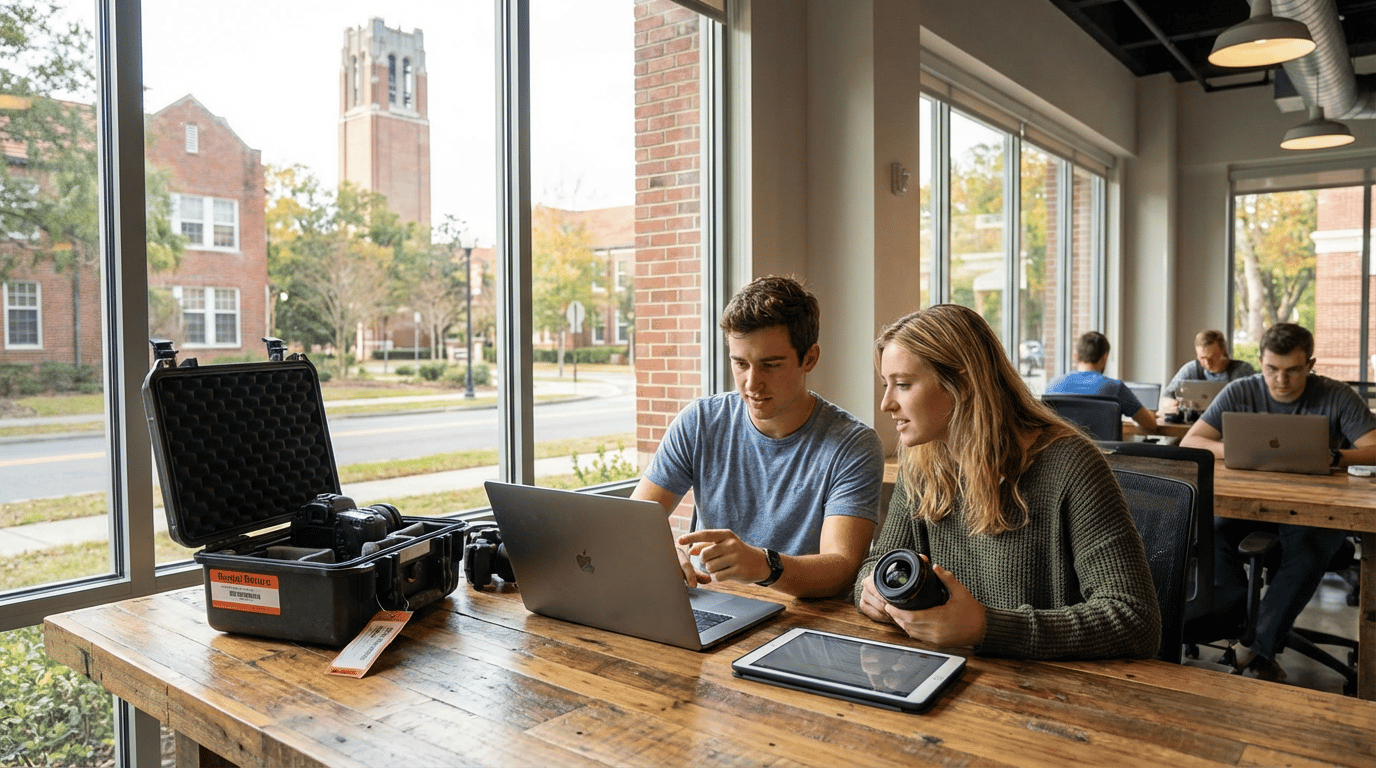
Gainesville, Florida isn't just home to the [University of Florida](https://www.ufl.edu/)—it's rapidly becoming known as one of the Southeast's most vibrant innovation hubs. The city's transformation into a startup ecosystem has been remarkable, with incubators like [Starter Space](https://www.starterspace.com/), accelerator programs through [UF Innovate](https://innovate.research.ufl.edu/), and a growing community of tech entrepreneurs choosing to build their ventures here rather than in larger metropolitan areas. What's particularly fascinating about Gainesville's innovation scene is how it intersects with the sharing economy. As entrepreneurs and creators look to maximize resources while minimizing overhead costs, the ability to access equipment, tools, and specialized gear through peer-to-peer rental platforms has become an essential component of the city's startup culture.
The Innovation Advantage: How Gainesville Became a Startup Powerhouse
Gainesville's emergence as an innovation center didn't happen by accident. The combination of [University of Florida's](https://www.ufl.edu/) research capabilities, relatively low cost of living compared to major tech hubs, and strategic investments in innovation infrastructure has created the perfect environment for startups to thrive. The [Innovation Square](https://innovationsquare.com/) district, located between downtown and the university, has become the physical manifestation of this ecosystem, housing everything from biotech startups to digital marketing agencies. According to the [Gainesville Area Chamber of Commerce](https://gainesvillechamber.com/), the city has seen a 35% increase in new business formations over the past three years, with technology and creative services leading the growth. This entrepreneurial spirit extends beyond traditional tech into areas like sustainable agriculture, renewable energy, and creative industries—all sectors where access to specialized equipment is crucial but full ownership often isn't financially feasible for early-stage ventures.
The Resource Challenge for Gainesville Entrepreneurs
While Gainesville offers many advantages for entrepreneurs, access to specialized equipment and tools remains a significant challenge, particularly for bootstrapped startups and student entrepreneurs. Traditional options like purchasing equipment outright can deplete precious startup capital, while commercial rental services often require long-term commitments or substantial deposits. This resource gap is particularly pronounced in sectors requiring specialized equipment: video production startups need cameras and lighting; hardware developers need prototyping tools; event businesses need audio equipment; and creative entrepreneurs need everything from photography gear to specialized crafting tools. The [Cade Museum for Creativity and Invention](https://cademuseum.org/) has helped address some of these needs through their maker spaces, but demand consistently outpaces availability. This is where the peer-to-peer rental economy has stepped in to fill crucial gaps in the innovation ecosystem.
How the Sharing Economy Supports Gainesville's Creative Class
Gainesville's creative economy—encompassing everything from independent filmmakers to digital artists, musicians, and event producers—has particularly benefited from the growth of peer-to-peer rentals. The city's vibrant arts scene, anchored by venues like the [Hippodrome Theatre](https://www.thehipp.org/) and fueled by programs like the [Arts in Medicine initiative](https://arts.ufl.edu/in-the-loop/news/uf-health-arts-in-medicine-program-receives-national-recognition/) at UF Health, creates constant demand for creative equipment. Local filmmaker and UF Digital Worlds Institute graduate Maria Gonzalez explains: 'When I was starting out, I couldn't afford to buy professional camera equipment, but I could rent it for specific projects. That made all the difference in producing work that could compete professionally.' This sentiment is echoed across Gainesville's creative community, where the ability to access high-quality equipment through peer-to-peer platforms has democratized creative production. The annual [Gainesville Latino Film Festival](https://www.gainesvillelatinfilmfestival.com/) has seen participation from student filmmakers increase by 40% since 2023, with many citing equipment accessibility through rental platforms as a key enabler.
The University Connection: How Student Entrepreneurs Leverage Shared Resources
With over 50,000 students at the [University of Florida](https://www.ufl.edu/), Gainesville has a constant influx of young innovators looking to turn ideas into reality. The [Entrepreneurship & Innovation Center](https://warrington.ufl.edu/centers/eic/) at UF's Warrington College of Business has become a launchpad for student ventures, with programs like the Big Idea Competition awarding seed funding to promising concepts. However, even with initial funding, student entrepreneurs face unique challenges in accessing necessary equipment. 'The gap between having a great idea and being able to prototype it is often just access to the right tools,' says Dr. Jamie Kraft, Director of the Entrepreneurship Center. 'We're seeing more students turn to peer-to-peer rentals to bridge that gap affordably.' This trend extends beyond business students to engineering, digital arts, and even agricultural sciences, where specialized equipment needs can be substantial. The university's [Innovation Academy](https://innovationacademy.ufl.edu/), which emphasizes creativity and entrepreneurship across disciplines, actively encourages students to explore resource-sharing models as part of their venture development process.
The Sustainable Advantage: Environmental Benefits of Gainesville's Rental Economy
Gainesville has long positioned itself as a leader in sustainability, with initiatives like the [Gainesville Green program](https://www.cityofgainesville.org/1191/Sustainability) and the city's commitment to 100% renewable energy. The sharing economy aligns perfectly with these environmental values by reducing the need for individual ownership of rarely-used items. A 2023 study by UF's [Center for Environmental Policy](https://www.cep.ees.ufl.edu/) found that every item shared through peer-to-peer platforms potentially prevents 15-20 new items from being manufactured over its lifetime. This reduction in production translates to significant environmental benefits in terms of reduced carbon emissions, resource extraction, and waste. For Gainesville's eco-conscious entrepreneurs and consumers, the environmental case for renting rather than buying is compelling. Local environmental organization [Sustainable Gainesville](https://sustainablegainesville.org/) has begun promoting the rental economy as part of their resource conservation initiatives, recognizing that shared access to tools and equipment represents a practical application of circular economy principles.
Practical Applications: How Gainesville Entrepreneurs Use the Rental Economy
The theoretical benefits of the rental economy become tangible when examining how Gainesville's entrepreneurs put them into practice. Take Synergy Creatives, a startup founded by UF graduates that provides marketing services to local businesses. 'For our video marketing campaigns, we rent different camera equipment based on each client's specific needs,' explains co-founder Jason Martinez. 'It would be impossible for us to own every piece of gear we might need, but through rental platforms, we can access exactly what each project requires.' Similarly, Gainesville-based event planning company Celebration Experts regularly rents everything from sound systems to decorative elements. 'The flexibility of renting means we can scale our equipment to match each event's size and budget,' says owner Sophia Williams. 'Plus, we're not stuck storing rarely-used items between events.' These examples illustrate how the rental economy enables businesses to operate with greater agility and lower overhead costs—crucial advantages in Gainesville's competitive entrepreneurial landscape.
As Gainesville continues to evolve as an innovation hub, the symbiotic relationship between entrepreneurship and the sharing economy will likely strengthen. The ability to access resources through peer-to-peer rental platforms doesn't just save money for startups and creators—it fundamentally changes what's possible by lowering barriers to entry across industries. For a mid-sized city competing with major metropolitan areas for talent and venture development, this resource efficiency represents a significant competitive advantage. Whether you're a student entrepreneur testing a concept, a creative professional producing content, or an established business looking to optimize operations, Gainesville's growing rental marketplace offers practical solutions that align with both economic and environmental goals. By embracing the sharing economy, Gainesville isn't just following trends—it's creating a more resilient, accessible, and sustainable innovation ecosystem that could serve as a model for similar communities nationwide.
.png)