
.png)
Rent or Buy a Kayak in Ann Arbor? The Real Cost Breakdown (2026)
2026-04-30

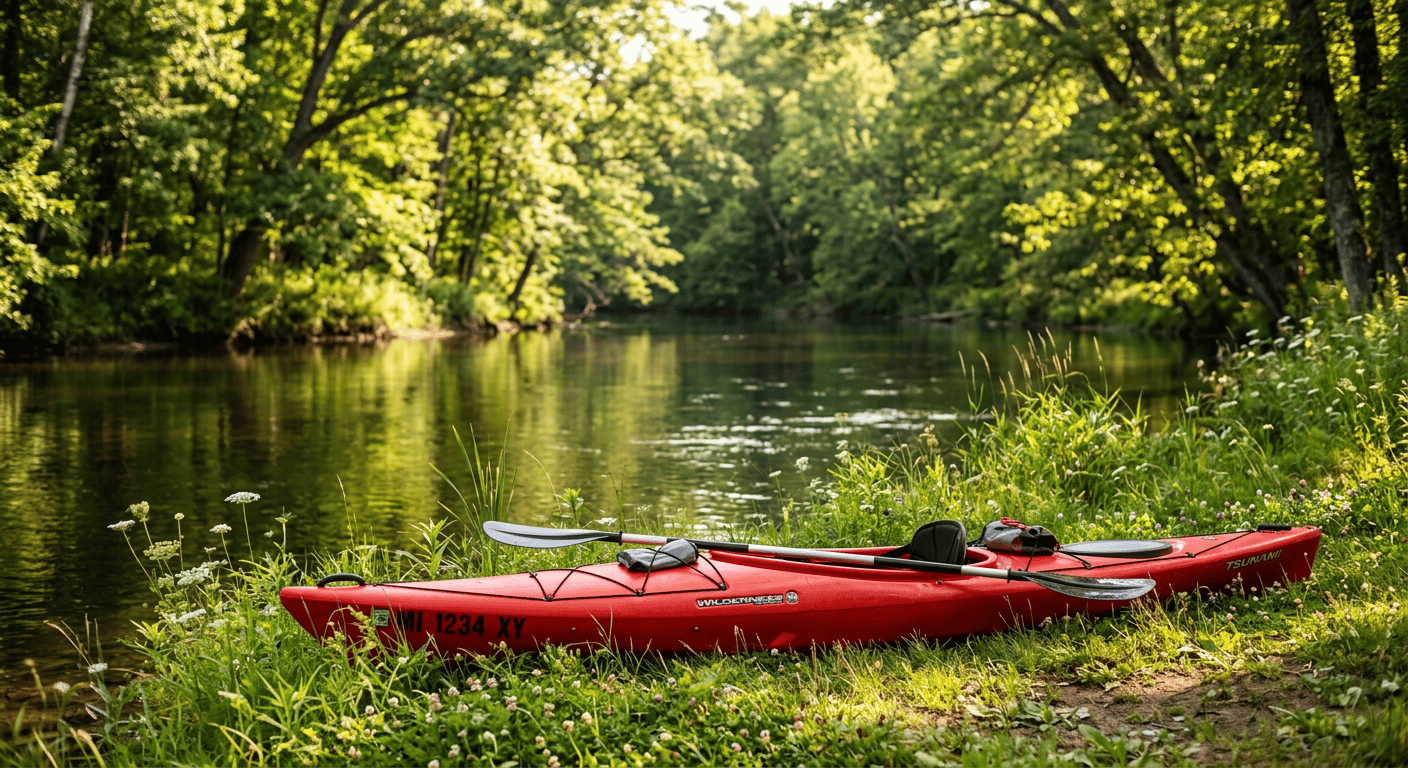
Whether you're planning a float down the Huron River or a weekend at Waterloo Recreation Area — Michigan's largest Lower Peninsula state park — the rent vs. buy kayak question deserves a real answer, not a gut feeling. Search interest for kayaking in the Ann Arbor region climbs steadily from late spring and peaks in July and August, which means the demand is seasonal and concentrated. That timing matters a lot when you're doing the math. This post breaks down the actual purchase costs, the break-even calculation across different paddler profiles, and the specific situations where renting a kayak in Ann Arbor is simply the smarter call.
What a Kayak Actually Costs to Own in Ann Arbor
A recreational sit-in or sit-on-top kayak suited for flatwater paddling on the Huron River typically retails between $400 and $900, with touring models pushing past $1,200. That's just the boat. Add a paddle ($60–$150), a Coast Guard-approved PFD ($40–$100), and a roof rack or transport system ($150–$400), and your total before your first launch can easily exceed $1,000 — sometimes by a wide margin. Storage is another cost most buyers underestimate. If you're renting garage space or paying for off-season storage, that number climbs further every year you own the kayak. By contrast, local liveries near Ann Arbor — including options at Argo Park — typically charge $14–$25 per hour or $45–$75 for a half-day. Peer-to-peer rentals through platforms like Yoodlize often land in a similar or lower daily range, with the added convenience of flexible pickup directly from a neighbor.
The Break-Even Math: How Many Days Until Owning Pays Off
Using a realistic mid-range setup — $700 for kayak, paddle, and PFD, excluding transport — and a peer-to-peer rental rate of $50 per day, you break even after 14 rental days. Here's how that plays out for three common paddler profiles:
Occasional paddler (2–3 days per year): At that pace, you'd hit break-even after roughly five years — and that's before factoring in storage, maintenance, and transport costs. Renting wins by a wide margin.
Seasonal paddler (8–10 days per year): Break-even arrives in about 18 months. This is the gray zone. The right answer depends on how much you value having your own gear ready to go versus the flexibility of renting without the overhead.
Frequent paddler (20+ days per year): Ownership pays off within a single season. If you're on the water every other weekend from May through September, buying is the financially sound move. One important reality check: Google Trends data shows that kayak interest in this region spikes hard in July and August. If your paddling is concentrated in those 8–10 weeks, you may be a seasonal paddler in practice — even if it doesn't feel that way in the moment.
When Renting a Kayak in Ann Arbor Makes More Sense
Renting beats buying in more situations than most people expect. Consider skipping the purchase if any of these apply to you:
You're planning a one-time destination trip — a rental for a day at Waterloo Recreation Area or Pictured Rocks avoids the full cost of ownership for a single experience.
Storage is a real constraint — a 10-foot kayak is not a closet item. Apartment dwellers and anyone without dedicated garage space will find that storage friction quietly erodes any ownership savings.
You want to test before committing — sit-on-top and sit-in kayaks behave very differently, as do recreational and touring hull designs. Renting lets you paddle several options before spending $700 or more.
You're outfitting a group — renting multiple kayaks for a family or friend group outing is almost always cheaper than purchasing and storing several boats.
You don't have the right vehicle — transporting a kayak without a proper roof rack or truck bed is genuinely difficult and adds real cost to ownership that often goes unaccounted for.
Peer-to-peer rental platforms like Yoodlize make this even more practical. You can rent directly from a neighbor, often at lower daily rates than a commercial livery, with flexible scheduling and direct communication about what's included.
When Buying a Kayak Actually Makes Financial Sense
Ownership is the right call under the right conditions — and those conditions are specific. Buy if:
You paddle 20 or more days per year — at that frequency, ownership pays off within a season and gives you full schedule flexibility with no booking lead time.
You have transport and storage sorted — a truck, a roof rack system, and a garage or shed removes the two biggest friction points of kayak ownership. Without both, the hidden costs add up fast.
You want a custom setup — seat padding, rod holders, dry hatch configurations, and hull length all matter for serious paddlers. Rentals offer limited customization and inconsistent gear quality.
You paddle the same water consistently — if you're exclusively on flatwater rivers like the Huron, a purpose-built recreational kayak tuned to that environment will outperform any general-use rental over time.
Find Kayak Rentals in Ann Arbor on Yoodlize
Yoodlize is a peer-to-peer rental marketplace where Ann Arbor residents list gear they own — including outdoor equipment like kayaks — for neighbors to rent by the day. It's a practical alternative to commercial liveries, especially for flexible scheduling or multi-day rentals. You can browse all current rentals in Ann Arbor on Yoodlize to see what's available across categories. If kayak listings are limited at the moment, that's actually a market signal worth noting: demand in this area is real and growing through the summer months, but local peer-to-peer supply hasn't fully caught up. If you own a kayak sitting unused between outings, listing it on Yoodlize is free — and neighbors actively searching for rentals in Ann Arbor have limited local options right now.
What to Check Before You Rent a Kayak
Whether you're renting from a livery or a neighbor on Yoodlize, a quick inspection before you launch saves real headaches on the water. Run through this list before you commit:
Hull condition: Look for cracks, deep gouges, or warping — especially near the bow and stern where impact damage concentrates.
Seating and footpegs: The seat should be adjustable and the footpegs functional. An uncomfortable fit over several hours is a genuine problem, not a minor inconvenience.
Paddle length: Confirm the paddle is appropriate for your height and the kayak's width. A mismatched paddle makes flatwater paddling significantly harder than it needs to be.
PFD fit: A life jacket must be Coast Guard-approved and fit snugly. Don't assume one is included — confirm before pickup.
Drain plug: Sit-on-top kayaks have drain plugs that must be seated before launching. A missing plug is a safety issue, not just an inconvenience.
Damage terms: Understand what counts as normal wear versus chargeable damage, and confirm the return window in writing before you take the boat.
For most Ann Arbor paddlers — those hitting the water 10 or fewer days a year — renting a kayak is the financially sound choice once you account for purchase price, transport, and storage. Ownership only clears the break-even threshold for paddlers logging 15 or more days annually, and even then, the convenience of peer-to-peer rental has real value. Browse rentals in Ann Arbor on Yoodlize to see what's currently available near you. And if you own a kayak sitting in your garage between uses, listing it free on Yoodlize puts it to work for neighbors who need it for a day — demand in Ann Arbor is real, and local supply is wide open.
.png)