
.png)
Rent or Buy a Kayak in Austin, TX? The Real Numbers for 2026
2026-06-16

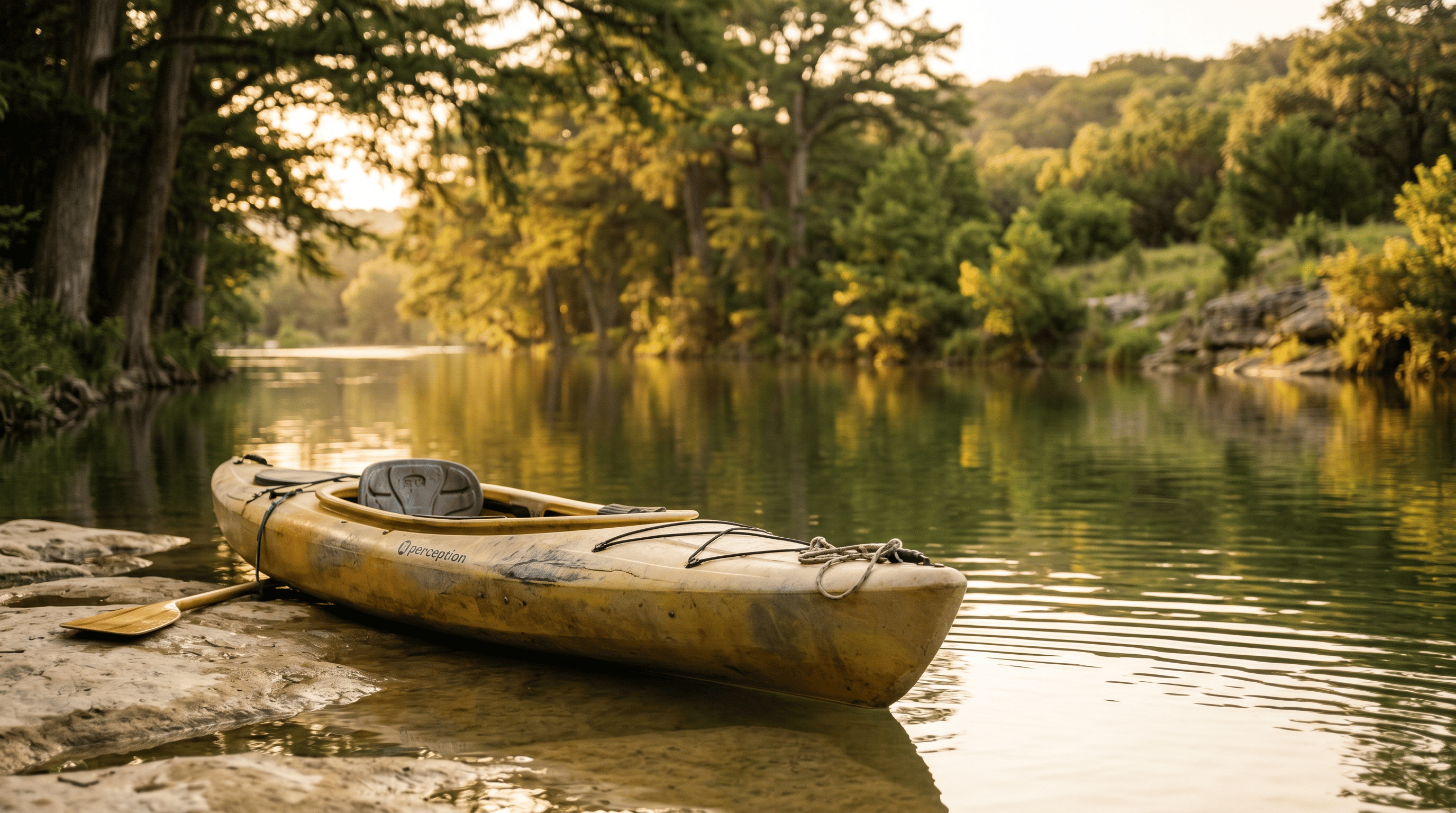
If you've paddled Barton Creek, floated Lady Bird Lake, or explored the Colorado River corridor, the question has probably crossed your mind: should I just buy a kayak? It's a reasonable thing to wonder — especially when Austin's waterways are accessible for most of the year and rental rates add up fast over a full season. The honest answer depends on how often you actually get out, what you're hauling it in, and where you're storing it when you're not. This guide covers the full cost picture — purchase price, local rental rates, break-even math, and the specific scenarios where each option wins — so you can make the call with real numbers instead of guesswork.
What a Kayak Actually Costs in Austin — Buying vs. Renting
A new recreational kayak in Austin runs $400 to $1,200 or more depending on the style. Basic sit-on-tops start around $400; quality fishing or touring models push past $1,000. Used kayaks on local marketplaces typically land between $200 and $600 depending on brand and condition. On the rental side, Austin-area kayak rentals — whether through outfitters near Lady Bird Lake or peer-to-peer listings on Yoodlize — generally run $35 to $75 per day for a standard recreational kayak, with tandem or specialty models priced higher. Google Trends data for the Austin metro shows kayak rental searches peaking sharply in late July and early August, which tracks with the hottest stretch of Texas summer and the highest demand on local waterways. That seasonal spike also means peer-to-peer supply on platforms like Yoodlize tends to expand during peak months as more local owners list gear they're not actively using.
The Break-Even Math: How Many Paddle Days Does It Take?
Using a mid-range purchase price of $600 and a daily rental rate of $50, you break even after 12 rental days — meaning 12 separate outings on the water. Here's how that plays out across different use patterns:
Occasional paddler (3–4 times per year): At four days of use annually, you'd hit the raw break-even in three years. Factor in storage, transport logistics, and basic maintenance, and the true break-even stretches to four or five years. Renting wins by a wide margin here.
Seasonal paddler (10–15 times per year): You'd break even in roughly 12 to 18 months of ownership. If you're consistently getting out on Barton Creek or the Colorado River every other weekend from April through September, buying starts to make financial sense by year two.
Frequent paddler (20+ times per year): Ownership pays off within the first year. At this cadence, the per-use cost of a $600 kayak drops below $30 per outing — well under rental rates — and keeps falling every time you launch.
When Renting a Kayak in Austin Makes More Sense
Renting is the right call in more situations than most people expect. Here's when it clearly wins:
You're new to the sport. Austin's waterways are beginner-friendly, but paddling once or twice a season doesn't justify a $600-plus investment. Rent first, buy only if you keep coming back.
Storage is a real constraint. A kayak is 9 to 12 feet long. If you're in an apartment or a home without a garage or yard, storing one becomes its own logistical headache — one that rental eliminates entirely.
You don't have a vehicle that can haul it. Transporting a kayak requires a roof rack, truck bed, or trailer. If you don't already own one, add $150 to $400 to your true cost of ownership before the first paddle stroke.
You want access to different boats. Renting lets you use a fishing kayak for a trip to Lake Travis, a tandem for Lady Bird Lake, and a touring hull for a longer float — without committing to a single design that may not fit every trip.
It's a one-time event. Hosting out-of-town guests, planning a group birthday float, or joining a paddle during Austin's busy spring festival season? Renting the exact number of boats you need for one day is far more practical than buying multiples and figuring out where to put them afterward.
Peer-to-peer platforms like Yoodlize are especially useful here because local owners set their own rates and availability, which means you can often find a kayak close to your launch point without paying outfitter markup.
When Buying a Kayak Makes More Sense
Ownership earns its cost when the math and logistics line up. Buying makes sense when:
You paddle 15 or more times per year. At that frequency, ownership becomes cheaper per outing than renting within 12 to 18 months, and you have the flexibility to go spontaneously without booking ahead or waiting on availability.
You have reliable storage and transport. A garage, a truck, and a roof rack turn kayak ownership from a logistical challenge into a straightforward weekend routine.
Your use case is specific. Fishing kayaks with pedal drives and rod holders, or touring hulls designed for flatwater speed, aren't always available in rental fleets. If you need a particular setup every time, ownership gives you the right boat on demand.
You paddle year-round. Austin's mild winters keep the water accessible most of the year. If you're not stopping when temperatures drop, the annual math shifts decisively toward buying.
You want to offset the cost. If you buy and list your kayak on Yoodlize when you're not using it, you can recover a meaningful portion of your ownership costs — or turn a profit — by renting to neighbors who need it for a day. Many Yoodlize owners in outdoor-friendly cities do exactly this.
What to Check Before You Rent a Kayak
Whether you're renting from a local outfitter or a peer-to-peer listing on Yoodlize, run through this checklist before you confirm:
Hull condition. Look for deep gouges, cracks near the bow or stern, or soft spots on composite boats. Minor surface scratches are cosmetic; structural damage affects both performance and safety.
Seat and footrest fit. Confirm the seat is secure and the footrests adjust to your leg length. A poorly fitted kayak is uncomfortable and harder to control, especially on longer paddles.
Paddle included and sized correctly. Most rentals include a paddle, but verify. Paddle length should match your height and the kayak's width — a mismatch makes every stroke less efficient.
PFD on board. Texas law requires a wearable personal flotation device for every person on the water. Confirm one is included with the rental and that it actually fits before you launch.
Drain plug seated. Sit-on-top kayaks have drain plugs that must be in place before you hit the water. A missing or loose plug will fill your hull fast.
Damage terms and return policy. Understand what counts as renter-responsible damage versus normal wear. On Yoodlize, each listing includes owner-set terms — read them before you confirm the booking and message the owner if anything is unclear.
Pickup logistics. Kayaks are bulky. Confirm whether the owner can meet you at a launch point or whether you need to arrange transport from their location.
Find Kayak Rentals in Austin on Yoodlize
Yoodlize is a peer-to-peer rental marketplace where Austin locals list gear they own but aren't using every day — kayaks, paddle boards, camping equipment, and more. Inventory updates continuously as new owners add listings, so availability shifts week to week. Browse current kayak and outdoor gear rentals in Austin on Yoodlize to see what's live right now. If you already own a kayak that sits in your garage between your own outings, listing it on Yoodlize is free and takes about five minutes — and it puts that idle gear to work earning money while you're not using it.
For most Austin paddlers — those who get out a handful of times between spring and late summer — renting a kayak is the smarter financial move until you're logging at least 12 to 15 days on the water per year. Below that threshold, the purchase price, storage requirements, and transport logistics of ownership simply don't pencil out. Browse kayak rentals in Austin on Yoodlize to see what local owners have available right now. And if you already own a kayak collecting dust between your own trips, list it free on Yoodlize and let your neighbors put it to use.
.png)