
.png)
Rent What Miami's Underground Artists and Entrepreneurs Actually Use
2025-12-09

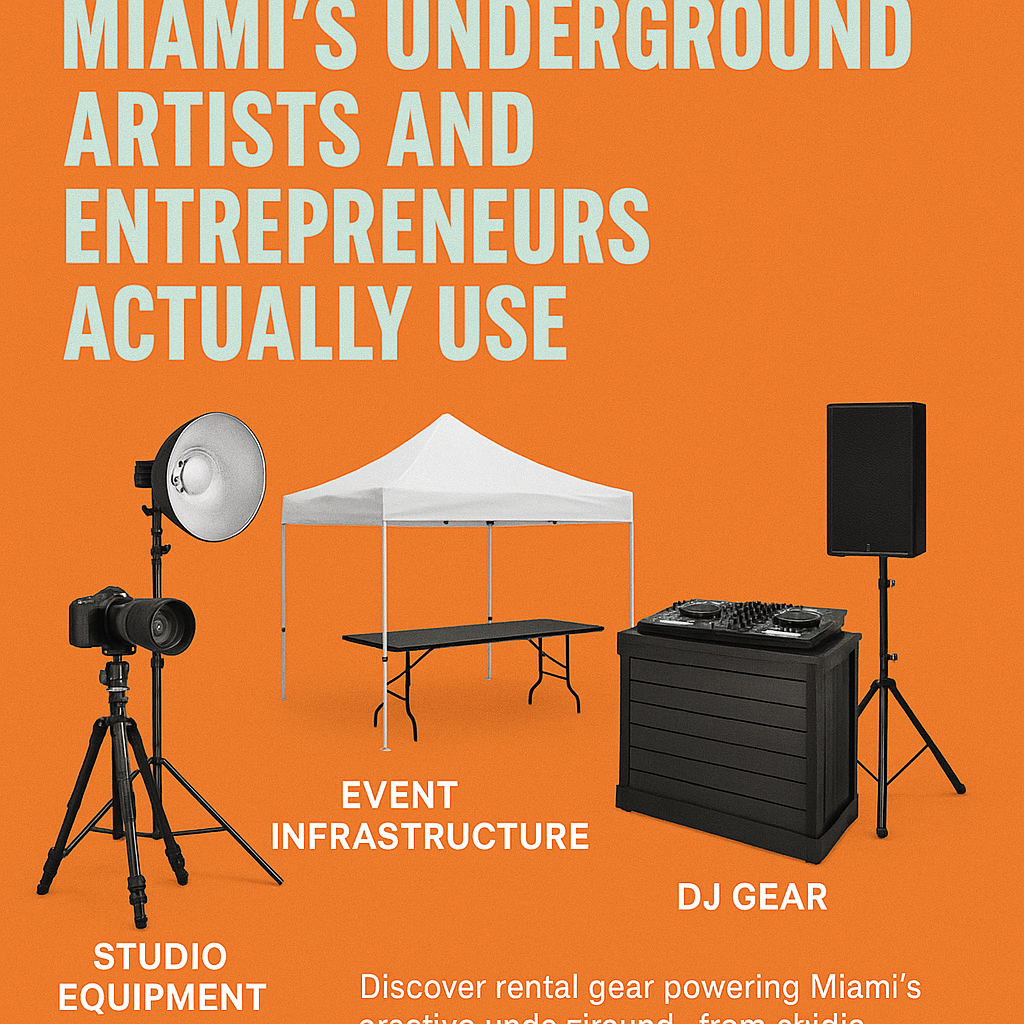
Walk through Miami's MiMo District on a Saturday morning and you'll notice something most tourist guides miss: the city's creative infrastructure isn't built on ownership, it's built on access. Between the shotgun houses of Coconut Grove and the industrial studios scattered across Little River, a parallel economy thrives where photographers share lighting rigs, event producers rotate sound systems, and weekend entrepreneurs launch pop-ups using borrowed commercial equipment. According to the Greater Miami Arts & Business Council, over 60% of the region's creative professionals operate as independent contractors or small business owners, making equipment ownership economically unfeasible. This is where Yoodlize's peer-to-peer rental model becomes essential infrastructure rather than convenience. Miami's cultural producers have quietly figured out what makes financial sense: rent the tools, own the output.
The Studio Equipment Circuit: How Miami's Visual Artists Actually Work
Miami's photography and video production scene operates on a rental-first model that would surprise anyone imagining South Beach glamour shoots. Professional-grade cameras, lighting kits, and backdrop systems circulate through neighborhoods like Wynwood and the Design District, moving from music video shoots to product photography sessions to gallery documentation projects. The Miami Herald's arts coverage regularly features emerging photographers who've built entire portfolios without owning a single high-end camera body. The math is straightforward: a professional cinema camera costs $8,000 to $15,000, while renting the same equipment for a weekend project runs $150 to $300 on platforms like Yoodlize. For creatives juggling multiple income streams, that difference determines whether a project happens or dies in the concept phase. Studio lighting setups, green screens, and audio recording equipment follow the same pattern. Miami's humid climate also makes storage a legitimate concern, with expensive electronics requiring climate-controlled spaces that many artists simply don't have. Renting solves both the capital and storage problems simultaneously, which explains why gear-sharing has become the norm rather than the exception in Miami's visual production community.
Event Infrastructure: The Hidden Rental Economy Behind Miami's Pop-Up Culture
Miami's event scene operates at a scale that would collapse under traditional ownership models. From the weekly markets at Lincoln Road to the underground dinner series in Little Haiti, successful events depend on a rotating inventory of tents, tables, commercial-grade coolers, portable bars, and sound systems that no single operator could justify purchasing. The city's Parks and Recreation Department requires specific permits and equipment standards for public space events, creating demand for professional-grade gear that gets used intermittently. Event producers have built informal networks where a DJ setup used for a Wynwood gallery opening on Friday night might power a Coconut Grove farmers market on Sunday morning. Yoodlize formalizes these existing sharing patterns, adding insurance, scheduling transparency, and geographic search capabilities. Commercial beverage dispensers, folding chair sets, and portable staging platforms represent particularly high rental turnover, with some items booking back-to-back weekends throughout Miami's peak season from November through April. The platform's local pickup model also matters in a city where traffic patterns and bridge access can make cross-county equipment transport genuinely complicated. Renting within your neighborhood isn't just convenient, it's often logistically necessary.
The Water Sports Reality: Why Miami Locals Rent Rather Than Store
Miami's relationship with water sports looks different when you live here versus when you visit. Tourists rent jet skis and paddleboards for obvious reasons, but year-round residents increasingly follow the same model despite having permanent addresses. The reason comes down to Miami's housing reality: storage space costs money, and waterfront access doesn't guarantee equipment storage. A kayak takes up 10 to 12 feet of garage or patio space that could otherwise accommodate a vehicle in a city where parking matters. Paddleboards, fishing gear, and snorkeling equipment all face the same spatial economics. The Biscayne National Park and Oleta River State Park both see heavy local usage, but the visitors arriving with rented gear often outnumber those hauling their own equipment. Miami's salt air and humidity also accelerate equipment degradation, meaning stored kayaks and boards require more maintenance than their actual usage might justify. Renting on-demand through Yoodlize shifts both the storage burden and maintenance responsibility to owners who've already solved those problems. For residents who paddle monthly rather than weekly, the rental model simply makes more financial sense than ownership, even when you factor in years of usage.
The Tool Library Concept: How Miami's DIY Community Shares Equipment
Miami's home improvement and DIY culture operates under constraints that make tool ownership particularly inefficient. The city's housing stock includes everything from 1920s Mediterranean Revival homes to modern condos, each requiring different specialized tools for maintenance and renovation. A tile saw used once for a bathroom project then sits unused for years. A pressure washer needed for annual exterior cleaning occupies garage space 51 weeks annually. The Miami-Dade Building Department enforces specific codes that sometimes require specialized equipment for permitted work, creating temporary demand for tools that homeowners will never use again. Yoodlize's peer-to-peer model essentially creates distributed tool libraries across Miami neighborhoods, where a power auger in Coral Gables becomes accessible to a homeowner in Pinecrest without either party needing to invest in permanent ownership. The platform particularly serves Miami's growing population of first-time homeowners who are simultaneously managing renovation projects and tight budgets. Renting a concrete mixer for a weekend patio project costs $40 to $60, while purchasing the same equipment runs $400 to $800 plus ongoing storage. The rental choice becomes obvious when you're only pouring concrete once. Miami's construction community has understood this dynamic for decades, with professional contractors maintaining rental relationships for specialized equipment. Yoodlize extends the same logic to residential users.
Seasonal Equipment and Miami's Actual Climate Patterns
Miami's subtropical climate creates rental demand patterns that don't match typical seasonal narratives. The city doesn't have a traditional winter, but it does have distinct wet and dry seasons that affect equipment needs. According to National Weather Service Miami, the dry season from November through April drives outdoor event activity, camping trips to the Everglades, and beach equipment usage. The wet season from May through October sees reduced outdoor recreation but increased demand for dehumidifiers, fans, and indoor event equipment. Hurricane season, officially running June through November per NOAA's National Hurricane Center, creates temporary spikes in generator, chainsaw, and heavy-duty tarp rentals. These dramatic seasonal swings make ownership economics particularly unfavorable. A portable generator that's essential during hurricane preparation sits unused for 11 months, yet represents a $500 to $1,500 purchase. Camping gear needed for winter Everglades trips becomes irrelevant during summer's heat and mosquito season. Yoodlize allows Miami residents to access seasonal equipment exactly when local climate makes it useful, then return it when conditions change. The platform's geographic focus also means renters can find equipment from owners who understand Miami's specific climate challenges, from rust-resistant camping gear to humidity-tolerant electronics.
Miami's creative and entrepreneurial communities have already voted with their wallets: renting beats owning when you're building projects rather than accumulating possessions. The city's unique combination of high housing costs, challenging storage conditions, and thriving independent professional culture makes peer-to-peer rental platforms like Yoodlize essential infrastructure rather than luxury convenience. Whether you're shooting a short film in Wynwood, launching a pop-up in Little Havana, or finally tackling that home renovation project, the equipment you need is already in your neighborhood, owned by someone who's solved the same storage and maintenance problems you're facing. Browse local rental listings on Yoodlize and discover what Miami's underground economy has known for years: access matters more than ownership, and your neighbors have exactly what you need.
.png)