
.png)
Renting Your Way Through Boston's Innovation Economy: Why Temporary Professionals Are Choosing Peer-to-Peer Over Ownership
2025-12-10

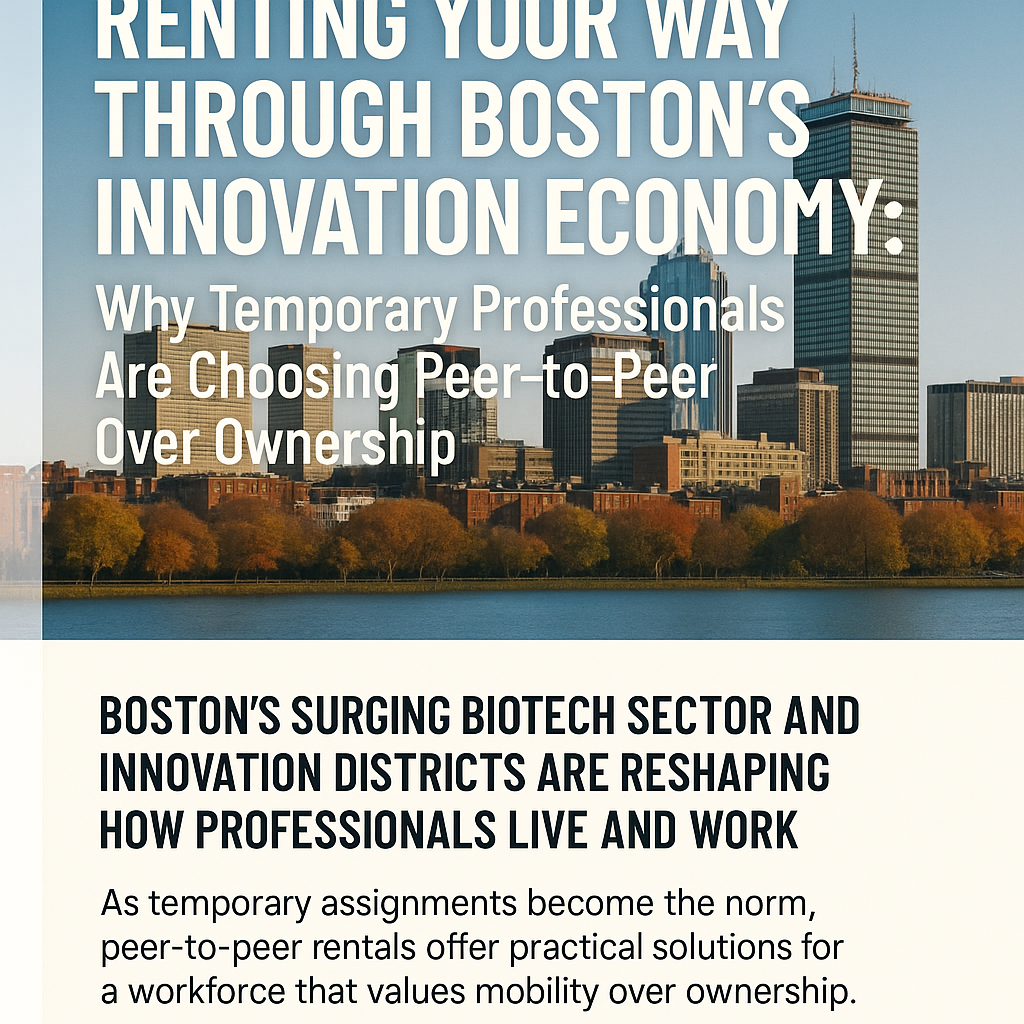
Boston's economy is experiencing a profound transformation. The city's biotech industry, centered in Kendall Square and spreading through the Seaport District, is attracting specialists on rotations lasting months rather than years. Travel nurses cycle through Longwood Medical Area. Visiting researchers arrive at MIT and Harvard for semester-long collaborations. Corporate consultants land in the Financial District for project-based work. These professionals share a common challenge: they need equipment and tools for finite periods, making traditional ownership impractical. According to McKinsey's research on innovation ecosystems, cities like Boston are increasingly defined by their ability to support mobile talent. This shift has created unexpected opportunities in the peer-to-peer rental market, where Yoodlize connects people who need temporary access to gear with locals who have items sitting unused.
The Biotech Professional's Equipment Dilemma
Boston's life sciences sector employs over 80,000 people, many on temporary contracts that don't justify purchasing expensive gear. A visiting researcher from California arrives for a six-month fellowship at Mass General but needs winter sports equipment for weekend trips to the White Mountains. A travel nurse completing a 13-week rotation at Brigham and Women's wants to explore the Cape Cod National Seashore but can't justify buying kayaking gear. A consultant working on a pharmaceutical project in Cambridge needs cycling equipment for commuting along the Charles River Esplanade but flies back to Texas every few weeks. Traditional retail forces these professionals into uncomfortable choices: buy items they'll rarely use again, rent from expensive commercial outfits with limited selection, or simply skip activities that would improve their quality of life. Peer-to-peer platforms like Yoodlize solve this by connecting temporary residents with Boston locals who have gear collecting dust. According to JLL's analysis of Boston's lab market, the biotech sector's growth continues despite recent slowdowns, ensuring steady demand for flexible living and rental solutions.
Furnished Apartments Meet Unfurnished Lives
Boston's short-term housing market has adapted brilliantly to accommodate mobile professionals. Companies like STARS of Boston provide furnished apartments in Brookline Village and the South End, solving the housing piece of the relocation puzzle. But furniture is only part of the equation. These professionals still need recreational equipment, specialized tools, event supplies, and seasonal gear that furnished apartments don't provide. A family relocating from Arizona for a year-long corporate assignment has an apartment with dishes and beds, but they need snow shovels, winter sports equipment, and camping gear for exploring New England's outdoors. A graduate student in a furnished Cambridge studio wants to host a dinner party but lacks serving platters, extra chairs, and party equipment. A remote worker staying in Back Bay for three months needs a portable monitor setup, photography equipment for documenting their Boston experience, and a bike for exploring neighborhoods. The Boston Transportation Department actively promotes cycling infrastructure, making bike rentals particularly valuable for temporary residents who want to experience the city beyond the MBTA. Peer-to-peer rentals fill these gaps without requiring professionals to ship belongings cross-country or make purchases they'll abandon when their assignment ends.
Seasonal Needs in a Four-Season City
Boston's dramatic seasonal shifts create unique challenges for temporary residents unfamiliar with New England weather patterns. Winter temperatures regularly drop below freezing, spring brings unpredictable rain, summer humidity requires specific gear, and fall's beauty demands outdoor equipment to fully appreciate. A California-based consultant arriving in January faces immediate needs: heavy winter coats, snow boots, ice scrapers, and possibly cross-country skis for weekend recreation. By April, that same person needs rain gear and equipment for exploring the Boston Harbor Islands. Summer brings opportunities for kayaking the Charles River, requiring water sports equipment they'll use for just ten weeks. Fall hiking in the Blue Hills Reservation demands different gear entirely. Purchasing four seasons worth of specialized equipment for a temporary assignment makes no financial sense. Commercial rental companies rarely offer the variety needed, often focusing exclusively on winter sports or water activities. Peer-to-peer platforms provide access to Boston residents who own complete seasonal wardrobes and equipment collections, accumulated over years of living in New England's variable climate. A local in Jamaica Plain who owns winter camping gear, spring hiking equipment, summer beach supplies, and fall foliage photography equipment can rent these items to professionals who need them for specific seasons.
The Innovation District Lifestyle Paradox
The Brookings Institution's research on innovation districts highlights Boston's Seaport as a prime example of mixed-use development supporting knowledge workers. These districts promise live-work-play environments where professionals can thrive without cars or extensive personal possessions. Yet the reality creates interesting contradictions. High-density living means minimal storage space. Professionals in Seaport condos or Kendall Square apartments have room for laptops and work clothes, but not kayaks, camping equipment, or party supplies. The innovation district lifestyle celebrates experiences over ownership, yet commercial rental options remain frustratingly limited or expensive. A biotech executive hosting colleagues for a rooftop gathering needs outdoor furniture, serving equipment, and possibly a portable sound system, none of which fit in a 650-square-foot apartment. A research team wants to organize a team-building kayaking trip on the Charles River but lacks the equipment and vehicles to transport it. A startup founder working from a Seaport coworking space wants to document their company's growth with professional photography equipment but can't justify purchasing gear used quarterly. Peer-to-peer rentals align perfectly with innovation district values: access over ownership, community connections, and resource efficiency. They enable the lifestyle these districts promise without requiring residents to compromise on experiences or fill precious storage space with infrequently used items.
Academic Cycles and Equipment Churn
Boston's 35 colleges and universities create predictable patterns of temporary residence. Visiting faculty arrive for semester-long appointments. Postdoctoral researchers come for two-year positions. Graduate students cycle through the city for specific programs or research collaborations. These academic professionals need equipment for finite periods that align poorly with traditional ownership or commercial rental models. A visiting professor teaching at BU for the fall semester wants to explore New England's foliage season but returns to their permanent home in December. A postdoc at Harvard Medical School needs winter sports equipment for their two-year appointment but ships everything back to Oregon when it ends. A graduate student attending a summer research program at MIT wants to experience Cape Cod beaches but leaves Boston in August. The academic calendar creates concentrated demand periods that commercial rental companies struggle to accommodate. September and January see surges as new arrivals need immediate access to seasonal equipment. May and December bring waves of departures as assignments end. Peer-to-peer platforms smooth these cycles by connecting academic professionals with Boston residents who can provide equipment precisely when needed, then rent those same items to the next wave of arrivals. This creates a sustainable ecosystem where gear circulates through the academic community rather than being purchased, used briefly, and abandoned.
Building Community Through Shared Resources
Boston's rental market traditionally operates through impersonal transactions: corporate housing providers, commercial equipment rental chains, and institutional arrangements. Peer-to-peer rentals introduce human connection to temporary residence. When a travel nurse rents camping equipment from a Brookline family, they often receive recommendations for the best hiking trails in the White Mountains. A consultant renting a bike from a Cambridge resident learns insider routes along the Emerald Necklace that tourists never discover. A visiting researcher borrowing party supplies for a going-away celebration connects with locals who share their academic interests. These interactions transform temporary residents from tourists into temporary community members. They learn about neighborhood events, discover local restaurants, and build networks that enrich their Boston experience. For locals providing rentals, these connections bring both income and purpose to items that would otherwise sit unused. A retired couple's camping equipment, gathering dust since their children moved away, now helps visiting professionals explore New England. A young family's baby equipment, outgrown but too valuable to discard, serves families on temporary assignments. This community-building aspect distinguishes peer-to-peer rentals from commercial alternatives. It creates social capital alongside financial transactions, strengthening Boston's reputation as a welcoming city for mobile professionals while making temporary residence feel less transient and more meaningful.
Boston's transformation into a hub for mobile professionals, temporary specialists, and innovation-driven careers has created unprecedented demand for flexible access to equipment and gear. The city's biotech boom, academic institutions, and innovation districts attract talent that values experiences over ownership and needs solutions that match their temporary timelines. Peer-to-peer rental platforms like Yoodlize connect these professionals with Boston residents who have exactly what they need, when they need it, without the commitment of ownership or the expense of commercial rentals. Whether you're arriving for a research fellowship, a travel nursing rotation, or a corporate project, explore Yoodlize to find the gear that will help you make the most of your time in Boston. And if you're a local with equipment sitting unused, consider how peer-to-peer rentals can turn those items into income while helping newcomers feel at home in your city.
.png)