
.png)
Uncovering Ann Arbor's Creative Underground: Artistic Subcultures and What to Rent for Authentic Local Experiences
2026-02-05

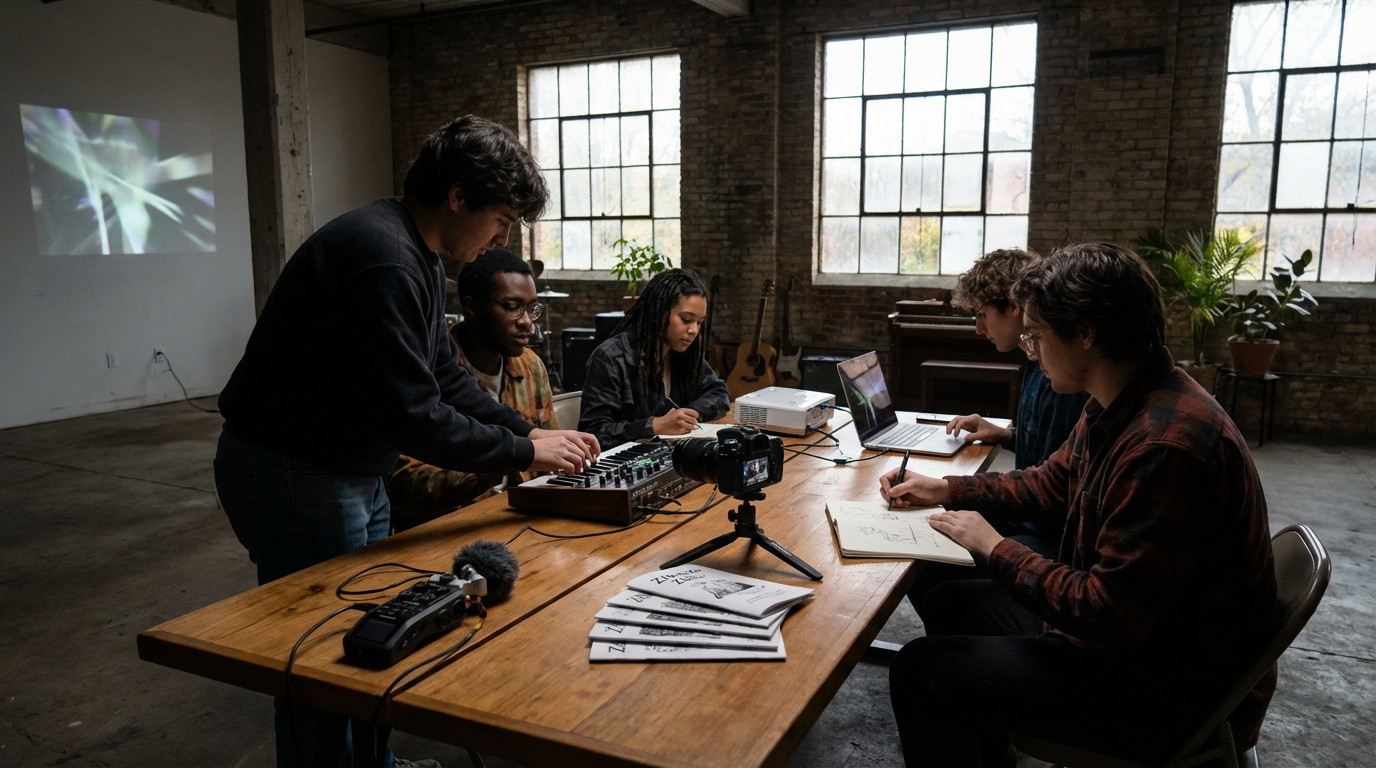
Beyond the maize and blue of https://umich.edu' target'blank'>University of Michigan lies Ann Arbor's pulsating creative heart—a network of artistic subcultures that thrive in converted warehouses, basement venues, and community-run spaces. While visitors often stick to https://www.a2gov.org/departments/downtown/Pages/default.aspx' target'blank'>Main Street's polished offerings, the city harbors a rich tapestry of underground music collectives, experimental art installations, and maker communities that represent Ann Arbor's true innovative spirit. This guide takes you beyond the standard campus tour to explore these creative ecosystems, connecting you with the tools and equipment you'll need (without the burden of ownership) to authentically experience these unique cultural pockets.
Ann Arbor's Thriving DIY Music Scene
Ann Arbor has long nurtured a vibrant underground music community that extends far beyond the mainstream venues downtown. Cooperative houses like the https://blindpig.com' target'blank'>Blind Pig Collective host intimate house shows featuring experimental electronic artists, while converted industrial spaces in the https://lsa.umich.edu/ncsp' target'blank'>North Campus area transform into temporary performance venues for noise, ambient, and avant-garde musicians. To fully immerse yourself in this scene, consider renting high-quality https://yoodlize.com/search?qrecording+equipment' target'blank'>recording equipment to document performances or create your own sonic experiments. A https://yoodlize.com/search?qportable+field+recorder' target'blank'>portable field recorder allows you to capture the unique acoustics of these unconventional spaces, while https://yoodlize.com/search?qsynthesizers' target'blank'>synthesizers and https://yoodlize.com/search?qdrum+machines' target'blank'>drum machines let you participate in impromptu jam sessions that often follow scheduled performances. The DIY ethos extends to the visual elements of these shows as well. Many venues feature projection mapping and interactive light installations created by local visual artists. Renting a https://yoodlize.com/search?qcompact+projector' target'blank'>compact projector and learning basic VJ software can help you contribute to these immersive environments.
The Zine and Small Press Community
While digital media dominates mainstream publishing, Ann Arbor supports a thriving zine and small press community centered around independent bookstores like https://www.literatibookstore.com/' target'blank'>Literati and community spaces like the https://aadl.org/' target'blank'>Ann Arbor District Library's Secret Lab. Monthly zine swaps and small press fairs attract creators from across the Midwest who share self-published comics, poetry chapbooks, and art zines. To participate in this tactile publishing renaissance, consider renting https://yoodlize.com/search?qbookbinding+equipment' target'blank'>bookbinding equipment or a https://yoodlize.com/search?qhigh-quality+scanner' target'blank'>high-quality scanner to digitize hand-drawn illustrations. Many zine makers also rent specialized https://yoodlize.com/search?qprinters' target'blank'>printers capable of producing the distinctive aesthetic these publications are known for—whether it's the nostalgic charm of risograph printing or the precision of archival inkjet. The https://www.facebook.com/groups/AnnArborZineFest/' target'blank'>Ann Arbor Zine Collective hosts regular workshops where participants can learn techniques ranging from basic folding and stapling to more complex Japanese stab binding. Renting the right tools in advance ensures you can apply these techniques to your own creations without investing in equipment you might use only occasionally.
Urban Exploration Photography Collectives
A growing network of urban exploration photographers documents Ann Arbor's architectural history through the lens of abandoned spaces, restricted access areas, and forgotten infrastructure. These photographers, operating in loose collectives, share information about locations and often mount guerrilla exhibitions in unexpected public spaces. For those interested in joining these excursions, renting proper https://yoodlize.com/search?qphotography+equipment' target'blank'>photography equipment is essential. A weather-sealed https://yoodlize.com/search?qcamera+body' target'blank'>camera body with low-light capabilities allows you to capture detailed images in dimly lit environments, while https://yoodlize.com/search?qwide-angle+lenses' target'blank'>wide-angle lenses help document tight spaces effectively. Consider also renting a https://yoodlize.com/search?qsturdy+tripod' target'blank'>sturdy tripod for the long exposures often required in these conditions. Safety equipment is equally important for these explorations. https://yoodlize.com/search?qheadlamps' target'blank'>Headlamps, proper footwear, and in some cases, https://yoodlize.com/search?qrespirators' target'blank'>respirators might be necessary depending on the location. Renting these items for specific outings makes more sense than purchasing them outright, especially for visitors or those new to the practice. Many of these photographers also experiment with alternative processes like cyanotypes and platinum printing. Community darkrooms occasionally open for workshops where you can rent https://yoodlize.com/search?qenlargers' target'blank'>enlargers and processing equipment to develop film using these historical techniques.
Maker Spaces and Technological Art Collectives
Ann Arbor's maker culture extends beyond the university's formal engineering programs into community-run spaces where artists, technologists, and tinkerers collaborate on projects ranging from interactive sculptures to wearable technology. The https://allhandsactive.org/' target'blank'>All Hands Active makerspace and similar collectives provide access to tools and expertise for those interested in the intersection of art and technology. For specific projects, renting specialized equipment makes more economic sense than purchasing. https://yoodlize.com/search?qlaser+cutters' target'blank'>Laser cutters, https://yoodlize.com/search?q3D+printers' target'blank'>3D printers, and https://yoodlize.com/search?qCNC+machines' target'blank'>CNC machines can be prohibitively expensive to own but are essential for creating certain types of technological art. Many makers also rent https://yoodlize.com/search?qoscilloscopes' target'blank'>oscilloscopes, https://yoodlize.com/search?qsoldering+stations' target'blank'>soldering stations, and electronic testing equipment for projects involving custom circuitry. These spaces regularly host skill-sharing workshops where participants learn techniques like circuit bending (modifying electronic devices to create new sounds) or building interactive installations using microcontrollers. Renting the necessary components allows newcomers to experiment without committing to expensive equipment purchases.
Guerrilla Gardening and Environmental Art
A network of environmental artists and guerrilla gardeners works throughout Ann Arbor to create temporary installations and permanent green spaces in unexpected locations. These projects range from native plant gardens in neglected lots to ephemeral sculptures made from natural materials in public parks. Participating in these activities often requires specialized https://yoodlize.com/search?qgardening+tools' target'blank'>gardening tools that might be impractical to own, especially for those living in apartments or temporary housing. Renting items like https://yoodlize.com/search?qpost-hole+diggers' target'blank'>post-hole diggers, https://yoodlize.com/search?qaugers' target'blank'>augers, and heavy-duty https://yoodlize.com/search?qpruning+equipment' target'blank'>pruning equipment allows participants to contribute to larger community projects without investing in tools they might use only occasionally. Documenting these often-temporary installations has become an important part of the practice. https://yoodlize.com/search?qtime-lapse+cameras' target'blank'>Time-lapse cameras and weather-resistant recording equipment help capture the evolution of these spaces over time. Renting this specialized gear ensures you have the right tools for specific environmental conditions without the commitment of ownership.
The Analog Gaming Renaissance
Beyond the digital realm, Ann Arbor supports a thriving community dedicated to analog gaming experiences—from role-playing game campaigns that have run continuously for decades to experimental board game design collectives that test new mechanics and themes. The https://www.vaultofmidnight.com/' target'blank'>Vault of Midnight and https://www.getyourgameon.com/' target'blank'>Get Your Game On host regular events where these gaming subcultures converge. For those hosting gaming events, renting large https://yoodlize.com/search?qtables' target'blank'>tables, specialized https://yoodlize.com/search?qlighting' target'blank'>lighting, and https://yoodlize.com/search?qaudio+equipment' target'blank'>audio equipment can transform an ordinary space into an immersive gaming environment. Many game masters also rent https://yoodlize.com/search?qprojectors' target'blank'>projectors and mapping software to create dynamic visual aids for their campaigns. The design aspect of this community often requires specialized tools as well. https://yoodlize.com/search?qlaser+cutters' target'blank'>Laser cutters for creating custom game pieces, https://yoodlize.com/search?qbinding+equipment' target'blank'>binding equipment for producing rule books, and high-quality https://yoodlize.com/search?qcameras' target'blank'>cameras for documenting prototypes are all items frequently rented by game designers working in this space.
Ann Arbor's creative underground represents the city's true innovative spirit—a network of interconnected communities constantly pushing boundaries and redefining what art and culture can be in a university town. By renting the right equipment rather than purchasing, you can authentically participate in these subcultures without the burden of ownership or storage concerns. Whether you're capturing the raw energy of a basement show, creating your own zine, or joining an urban exploration photography expedition, having access to the proper tools enhances your experience and connects you more deeply with these vibrant communities. As these artistic ecosystems continue to evolve, the ability to adapt your toolkit through rentals rather than purchases allows you to remain nimble and engaged with Ann Arbor's ever-changing creative landscape.
.png)